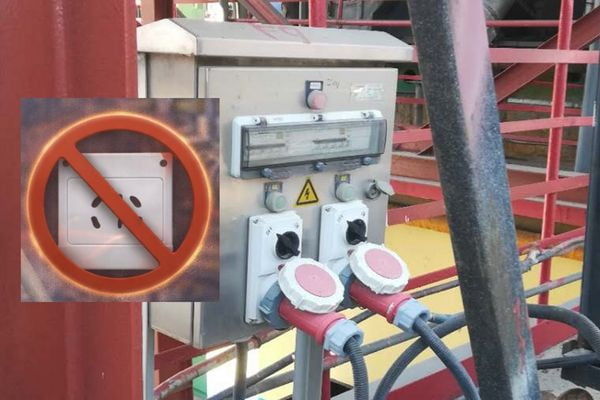
Struggling with power connections that fail in tough conditions? Using a standard wall socket for heavy machinery is a recipe for disaster. Let's explore why industrial-grade solutions1 are non-negotiable.
A household plug is for home use. It cannot handle high power, water, dust, or vibration. Industrial plugs, like those following the IEC 60309 standard2, are built specifically for these harsh conditions, ensuring safety and reliability where it matters most.
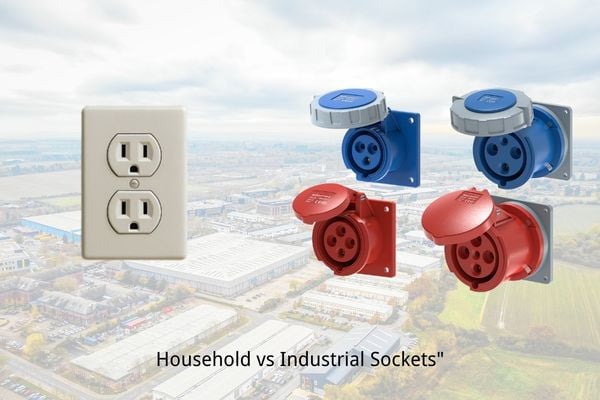
I've spent decades in the power connection industry. A common mistake I see is underestimating the difference between the plug for your desk lamp and the plug for a factory conveyor belt. They look like they do the same job, but they are worlds apart. The story of how even the simple household plug3 got its standards is very telling. It reveals a fundamental truth about safety and purpose-built design. Let's look back at this history. It helps explain why you can't cut corners in an industrial setting.
How did China's first plug standards come about?
Imagine a world with no standard plugs. Every appliance would need a unique socket. This would be chaotic and incredibly unsafe. This is why national standards were created, starting decades ago.
China’s first national standard for plugs and sockets was GB1002-67. It was created in the 1960s. The design was based on international recommendations from IEC 83 and standards used in countries like Australia. It established a flat-pin design for the Chinese market.
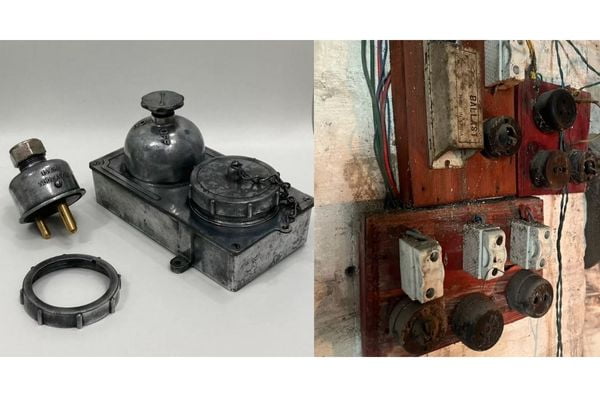
In our factory's early days, we saw the impact of these first standards. Before them, things were inconsistent. The government knew it had to act. They looked at what the International Electrotechnical Commission (IEC) was recommending. They also studied the flat-pin plugs used in Australia and New Zealand. They took these ideas and adapted them for our own needs here in China. This resulted in the first-ever national standard, GB1002-67. It was a huge step forward. Later, in the 1970s, this standard was updated to GB1002-80. At the same time, a new standard, GB2099-80, was introduced. This new one was very important. It added specific safety rules.
Here are some of the key safety points it covered:
- Resistance to Abnormal Heat: The socket had to withstand high temperatures without melting or catching fire.
- Insertion and Withdrawal Force: The plug had to fit snugly, not too loose and not too tight.
- Single-Pole Insertion Prevention: This made it impossible to insert just one prong of a plug into the socket, a major safety feature to prevent electric shock.
- Insulation and Strength: The materials had to be strong and provide good electrical insulation.
These rules were all about making the plug and socket itself safe for people to use.
Why did the standards need a major update in the 1990s?
Your country's standards are different from the rest of the world's. This makes international trade very difficult. It also creates confusion about safety levels. This is why China updated its standards to match global ones.
In the 1990s, as global trade increased, China updated its standards to match international IEC norms. This brought us GB2099.1-1996 and GB1002-1996. These became mandatory, improving product safety and making them compatible with international markets.
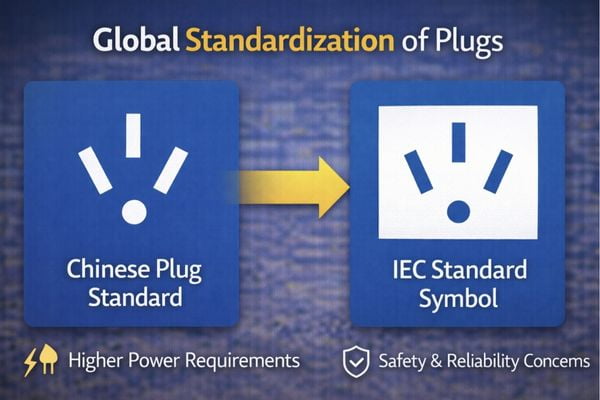
Technology was advancing quickly, and our country was opening up to more trade. The old standards from the 80s were just not good enough anymore. To keep up and to make our products competitive on the world stage, we had to get in line with international best practices. The big move was to adopt the IEC 884-1 standard from 1994. This led to our own new, mandatory standards: GB2099.1-1996 for general requirements and GB1002-1996 for single-phase plug dimensions. I remember this shift well. It forced many manufacturers, including us, to raise our quality and safety game. It was a good thing for everyone. Another interesting thing happened around this time. Many products on the market were "universal" sockets that could accept many different plug types. These were popular but not very safe. So, a special standard, GB2099.3-1997, was created just for these converters to make them safer.
This table shows the clear progression:
| Period | Key Standard(s) | Main Focus |
|---|---|---|
| 1960s-1980s | GB1002-67, GB1002-80 | Basic type, dimensions, and initial safety rules. |
| 1990s | GB2099.1-1996, GB1002-1996 | Aligning with IEC standards, mandatory safety. |
| Late 1990s | GB2099.3-1997 | Addressing the safety of "universal" converters. |
This evolution shows a constant push for better safety and a need to keep up with a changing world.
What do modern household standards teach us about industrial needs?
You have modern, safe household plugs in your home. But they still can't handle the vibration, water, dust, and high currents of a factory floor. This is where the story of standards splits into two different paths.
Modern household standards, like the updated GB2099 series from 2008, are very detailed. But their focus on domestic safety only proves why they are totally wrong for industrial use. Industrial sites need their own specialized standards, like IEC 60309.

The standards for household products continued to evolve. In 2008, a whole new set of GB2099 standards was released, following the latest IEC 60884-1 version from 2006. This family of standards covered everything from converters and switched sockets to plugs with fuses. They made homes safer than ever. But here is the most important lesson from this entire history: all of these excellent, detailed standards were designed for one environment—the home. A factory, a construction site, or a shipping port is a completely different world. A household socket is not designed to be sprayed with water. It's not built to survive being run over by a forklift. And it certainly can't handle the massive electrical loads of industrial machines. That is why our company, from day one, has focused only on industrial connection systems. The needs are just too different.
Let's compare them directly:
| Feature | Household Socket (GB2099) | Industrial Socket (IEC 60309) |
|---|---|---|
| Environment | Clean, dry, stable indoor areas. | Harsh, wet, dusty, high-vibration sites. |
| Protection | Basic shock protection. | Waterproof and dustproof (IP44, IP67). |
| Current | Low (e.g., 10A, 16A). | High (16A up to 125A and more). |
| Materials | Standard plastics. | High-impact, chemical-resistant PA66/PC. |
| Safety Lock | None or simple switch. | Mechanical interlocks that prevent removal under load. |
This is why you can't mix and match. Using a household extension cord on a factory floor isn't just a bad idea; it's a dangerous violation of safety principles.
Conclusion
The history of household plugs teaches us how vital standards are for safety. For industrial work, you need a much higher standard. We provide that specialized, reliable industrial standard.