
High-current connections can fail, causing downtime and serious safety risks. A loose connection means overheating and costly repairs. Reliable single-pole connectors prevent these problems before they start.
Single-pole insulated round connectors1 are vital for high-current systems2 because they handle one conductor per connector. This design improves safety, provides flexibility for large cables, and allows for easier installation and maintenance, especially in temporary power setups like generators or construction sites.
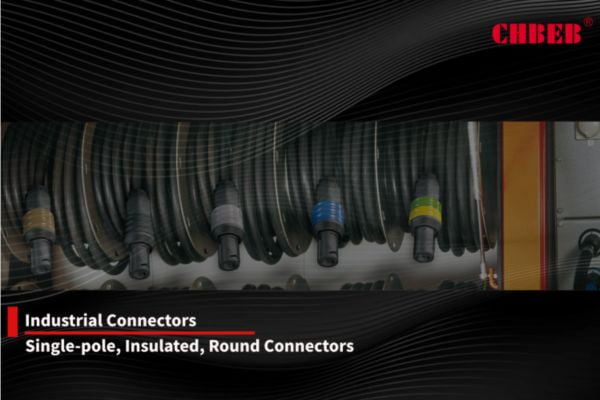
Choosing the right connector is more than just matching numbers on a spec sheet. It's about understanding how these components perform in the real world. I’ve seen projects delayed because of a simple connector choice. Let's break down what makes these connectors so important and how to select them correctly.
Why Are Single-Pole Designs Better for High-Current Jobs?
High current generates immense heat and stress. A crowded multi-pin connector can overheat and fail. Single-pole designs separate conductors, managing heat and making handling much safer.
Single-pole designs are preferred for high current because they isolate each conductor. This allows for better heat dissipation, use of larger cables, and clearer phase identification. It simplifies maintenance and reduces the risk of dangerous misconnections, making the entire system safer and more reliable.
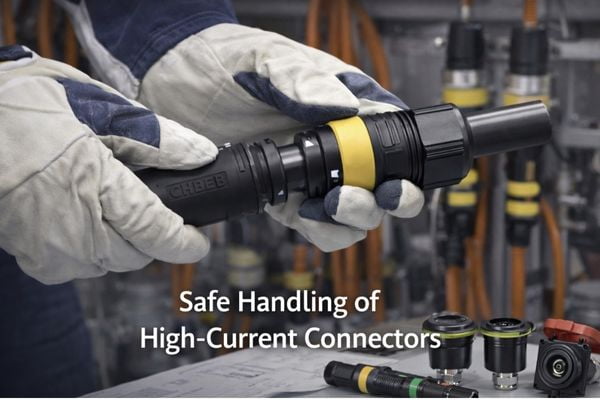
I remember visiting a site where a multi-pin connector for a large generator had failed. The pins were too close, and heat built up, melting the housing. This is a classic problem. Single-pole designs solve this by giving each connection its own space.
Better Thermal Management
Each connector body acts as its own heat sink. There's no heat transfer between phases inside a crowded housing. This means the connector can run closer to its maximum rated current without degrading. You get better performance because heat can escape more easily.
Easier Handling and Termination
Terminating a very large cable into a multi-pin block is difficult. You have to bend thick wires at sharp angles. With single-pole connectors, you get straight, direct access. This makes the termination process simpler and more reliable. A good, solid termination is critical for preventing hot spots. We always advise our partners to use the correct crimping tools for the job. It makes all the difference in the final connection quality and long-term safety.
How Do You Choose the Right High-Current Connector?
Picking the wrong connector leads to system failure. You face overheating, unexpected shutdowns, and safety hazards. A structured selection process ensures reliability and protects your investment.
To choose the right connector, look beyond just current and voltage. You must evaluate the IP rating for environmental protection, the mechanical locking system for security, and the termination method for cable compatibility. Consider the real-world operating temperature3 and duty cycle, not just the datasheet numbers.
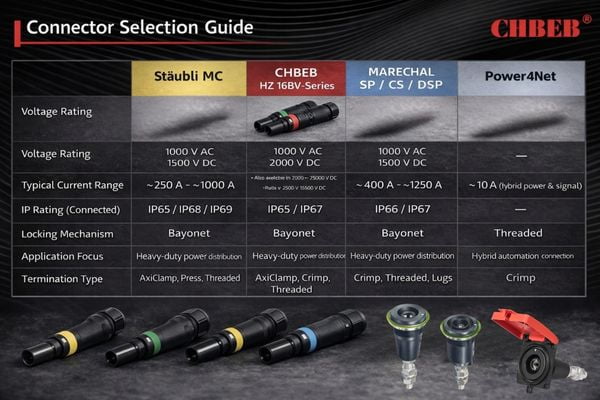
Selecting a connector isn't a simple matching game. We guide our OEM partners through a checklist to avoid common mistakes. It's about matching the connector to the entire application environment, not just the electrical load. Here are the key factors we always discuss with our clients before they place a large order.
Key Selection Factors Breakdown
| Factor | What to Check | Why It Matters |
|---|---|---|
| Electrical Performance | Rated current, voltage, and temperature rise. | A connector might be rated for 400A, but that rating can drop in high ambient heat. Always check the derating curve. |
| Insulation & Safety | Touch-safe design (IP2X when unmated). | Protects technicians from accidental contact with live parts. This is non-negotiable in most industrial settings. |
| Environmental Seal | IP Rating (e.g., IP67 for waterproof). | A connector used outdoors needs to resist rain and dust. A poor seal leads to corrosion and electrical failure over time. |
| Mechanical Lock | Positive locking mechanism (e.g., bayonet). | Prevents accidental disconnection from vibration or cable tension. I've seen loose connectors arc and cause fires. |
| Termination Quality | Crimp or set-screw type, wire gauge range. | A poor crimp is the most common failure point. It creates high resistance and heat. Ensure the connector matches your cable perfectly. |
What Makes High-Current Connectors Fail on Site?
Your system is down, and the cause is a burnt connector. This unplanned downtime costs money and creates risks. Understanding common failure modes helps you prevent them entirely.
High-current connectors usually fail from human error, not product defects. The main causes are loose connections, improper crimping during installation, and using a connector with the wrong IP rating for the environment. These issues lead to overheating, arcing, and eventual failure under load.
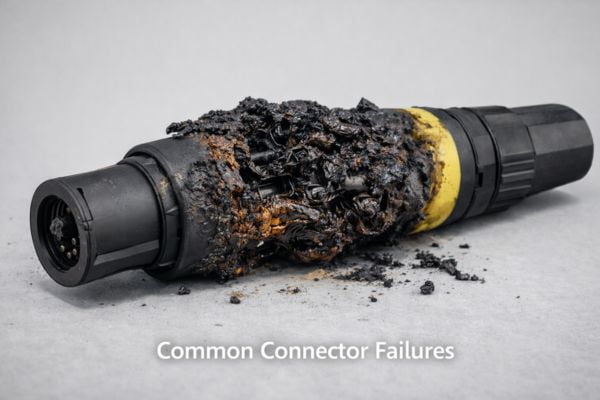
In our 60 years of experience in the power industry, we've seen it all. It's almost never the connector's fault on its own. The problem usually starts during installation or specification. We constantly train our partners to look for these red flags because prevention is always cheaper than a fix.
Top 3 Failure Causes
- Poor Termination: This is number one. Someone uses pliers instead of a proper crimping tool, or they don't strip the cable correctly. This creates a weak spot with high resistance. Under high current, this spot gets incredibly hot. The result is a melted connector and a potential fire hazard.
- Incorrect Mating: Sometimes, a connector isn't fully locked. It might feel connected, but the contacts aren't fully engaged. Vibration can cause micro-arcing between the contact surfaces. Over time, this damages the contacts, increases resistance, and leads to a complete failure.
- Environmental Mismatch: An IP44 connector used in a washdown area is a recipe for disaster. Water gets inside, causing short circuits or corrosion. You must match the IP rating to the real-world conditions where the connector will live. It's a simple check that saves a lot of trouble later.
How Can We Test and Verify Connectors Before Buying in Bulk?
You need to order thousands of connectors for a project. Choosing the wrong one means massive rework and costs. A simple on-site test can save you headaches.
Verify connectors by first confirming specs with the supplier's technical data. Then, order samples and perform a hands-on test. Check the locking feel, ease of termination, and overall build quality. Finally, install samples in a real-world test and monitor their temperature under load.
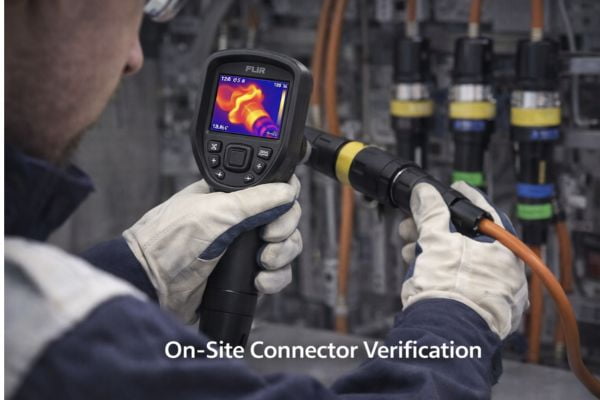
Before a major EPC contractor commits to our connectors for a new power plant, they don't just trust our datasheets. We encourage them to verify our products themselves. This process builds confidence and ensures there are no surprises down the line. I advise everyone to follow a practical, three-step verification process4.
A Simple Verification Plan
- Step 1: Document Review. Get the full technical file from the supplier. Ask for test reports, material specifications (we use high-quality PA66 for thermal resistance), and certification documents like TUV or UL. Don't just look at the current rating. Check the temperature rise data. This is the paper-check phase.
- Step 2: Hands-On Sample Test. Get a few samples in your hand. How does the locking mechanism feel? Is it a solid, positive click? Try terminating a cable. Is it straightforward? Does the cable grip feel secure? This physical check tells you a lot about the design and manufacturing quality.
- Step 3: In-Situ Load Test. Install the sample connectors in a non-critical part of your system. Run them under a real load. After a few hours, check their temperature with a thermal camera5. A good connector should only be slightly warmer than the cable. A hot connector is a major red flag.
Conclusion
Single-pole connectors are crucial for safe and flexible high-current systems. Proper selection and installation are key to protecting your equipment, your people, and your operational uptime.
About CHBEBplugs
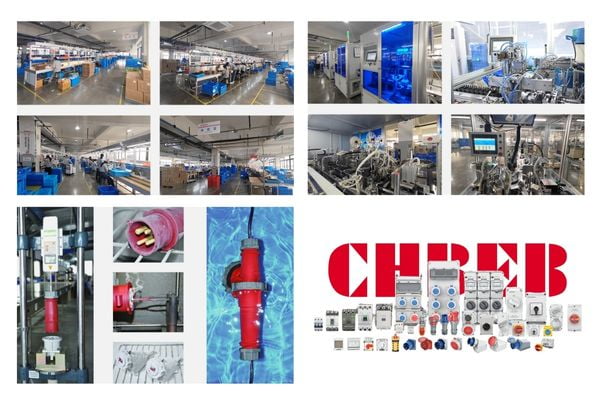
CHBEBplugs is the industrial plug and socket brand under the CHBEB Group, backed by over 60 years of power industry experience. We specialize in export-oriented B2B manufacturing of industrial plugs, sockets, socket boxes, and power connection systems. Supported by China’s mature electrical industry clusters, we provide IEC-compliant products, OEM/ODM customization, and stable large-volume supply for global EPC and industrial projects.
Explore the advantages of single-pole insulated round connectors for high-current systems and their impact on safety and performance. ↩
Learn about high-current systems, their applications, and why they require specialized connectors for safety and efficiency. ↩
Understand the importance of considering real-world operating temperatures when selecting connectors. ↩
Learn about the verification process for electrical connectors to ensure quality and reliability before bulk orders. ↩
Discover how thermal cameras can be utilized to test connectors and monitor their performance under load. ↩