Struggling to find a power connector that won't fail in a tough environment? You need a reliable solution, but standard plugs just can't handle the dust, water, and stress of industrial use.
An industrial plug is a heavy-duty connector1 designed for high-power applications2 in harsh settings. It follows standards like IEC 603093 to ensure safety, durability, and a secure connection for machinery, construction sites, and data centers, preventing accidental disconnection and protecting against environmental hazards.
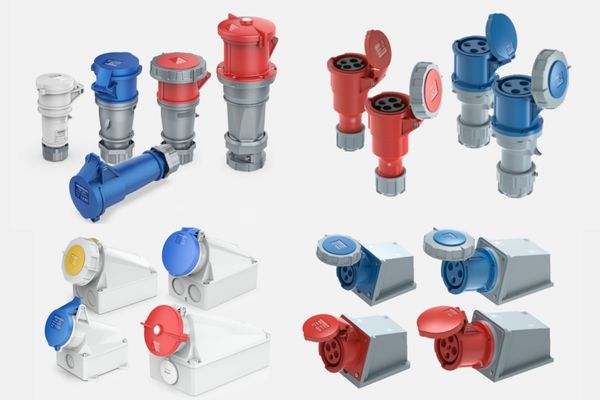
I've spent decades in this industry, and I've seen firsthand how a simple plug can make or break a multi-million dollar operation. It's more than just a piece of plastic; it's a critical component for safety and uptime. Let's break down everything you need to know to choose the right one, from the materials inside to the specific type your project requires. This guide will help you make an informed decision.
What Exactly Is an Industrial Plug?
Your factory equipment keeps shutting down from loose connections. You need a plug that stays locked in, but everything you've tried fails under vibration or strain, costing you time and money.
An industrial plug4 is an engineered device built for safety and reliability. Unlike household plugs, it features a robust housing, a pin-and-sleeve design5 for a secure fit, and specific keying to prevent connecting mismatched voltages. It’s made to withstand impact, chemicals, and extreme temperatures.
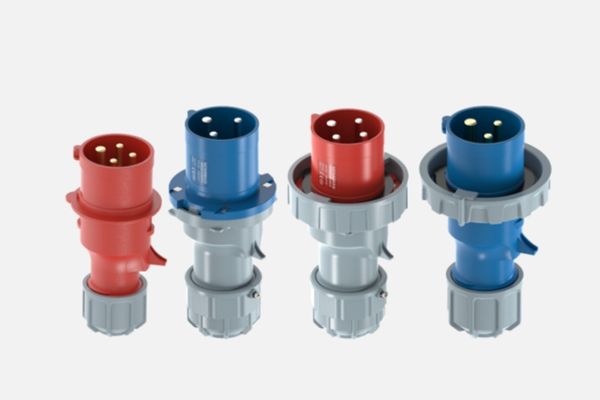
Many people think an industrial plug is just a bulky piece of plastic. From my experience in the factory, I can tell you that's completely wrong. The manufacturing process is incredibly demanding. We use specialized engineering plastics like PA66, which requires extremely stable injection molding machines. If the machine's temperature or pressure fluctuates even slightly during the injection and cooling process, the dimensions will be off. This can cause a poor seal, leading to a failed IP rating6, or a loose connection that can cause a fire. The precision needed is why these plugs are so different from simple plastic parts. It's a high-tech process to guarantee safety and performance under pressure.
How Does an Industrial Plug Work?
Are you worried about accidental unplugging causing dangerous power interruptions? A standard plug can easily slip out, creating a major safety hazard and stopping production in its tracks.
An industrial plug works by using a pin-and-sleeve system. The male plug has solid pins that fit snugly into the female socket's sleeves. A protective shroud on the plug covers the pins, and a locking ring or latching mechanism ensures it cannot be pulled out accidentally.
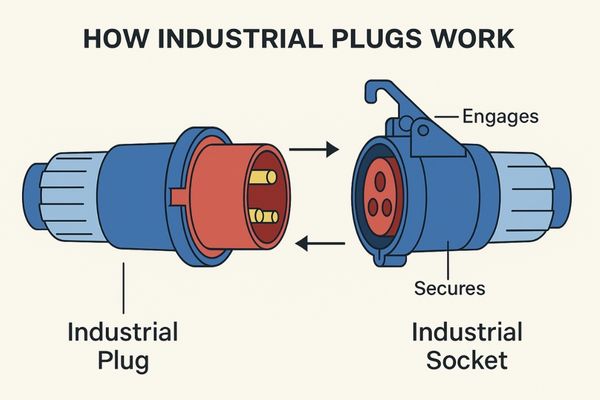
The core function is creating a stable, uninterrupted electrical path. The secret is in the precision fit. The pins and sleeves must have near-perfect alignment and contact pressure. This is achieved through high-precision molds and stable manufacturing. In our facilities, we monitor the cooling cycle of the plastic housing very closely. If it cools unevenly, the part can warp, making it impossible to get that secure, waterproof seal. The plug's mechanism is simple in concept, but its reliability comes from this intense focus on manufacturing tolerances7. It ensures that once it's connected, power flows consistently without the risk of arcing or disconnection, even when subjected to heavy vibration from nearby machinery.
What Are the Key Components Inside an Industrial Plug?
Do you know what makes one plug last for years while another fails in months? The quality is determined by the internal components, but it's hard to tell what's good just by looking.
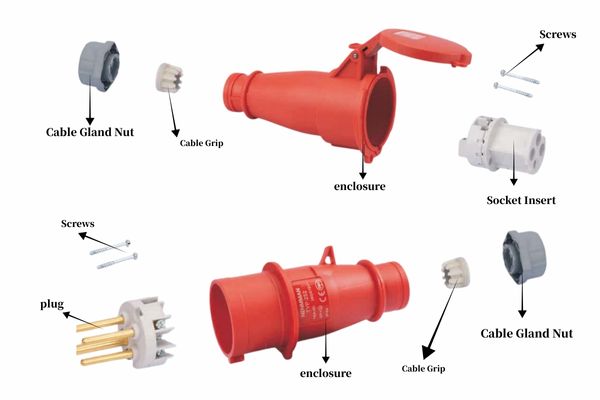
A high-quality industrial plug consists of three main parts: the housing, the contact pins and sleeves, and the cable gland8. The housing is made from durable engineering plastics like PA66 for impact resistance9. The pins are typically nickel-plated brass10 for excellent conductivity and corrosion resistance11. !An exploded view of an industrial plug showing its components.](https://chbebplugs.com/wp-content/uploads/2025/11/Connector-anatomy.jpg "Industrial Plug Components")
Let's look deeper at the materials, as this is where quality is truly defined.
Key Components and Their Importance
| Component | Material | Why It Matters |
|---|---|---|
| Housing | PA66 / PC | This is not ordinary plastic. It's a high-grade thermoplastic that provides thermal stability, impact strength, and insulation. |
| Pins/Sleeves | Nickel-Plated Brass | Brass is a great conductor. The nickel plating prevents oxidation, ensuring a reliable, low-resistance connection over time. |
| Cable Gland | Rubber / Neoprene | This part seals the entry point of the cable. It provides strain relief and prevents water and dust from getting inside. |
The housing material is the most critical. We often use PA66 with glass fiber reinforcement. This material has a high shrinkage rate, making it very difficult to mold. If the mold temperature or injection pressure isn't perfectly controlled, the final part won't meet the required dimensions. This is why you see so many quality issues with plugs made on older or less stable equipment; the parts simply don't fit together perfectly, which compromises the entire plug's safety and waterproof rating.
Why Do Industrial Plugs Matter in Modern Electrical Systems?
Do you think a cheap connector is a good way to save money? A single failure can cause equipment damage, fires, or worker injuries, leading to costs that far exceed the initial savings.
Industrial plugs are essential for operational safety and efficiency. They prevent costly downtime by ensuring a reliable power supply. Their standardized design (IEC 603093) guarantees interoperability and prevents workers from connecting equipment to the wrong voltage source, which could destroy expensive machinery.
In today's automated and high-power environments, electrical stability is everything. A weak link in the power chain can halt an entire production line. Industrial plugs provide that strong link. For example, our interlocked sockets have a mechanism that prevents the plug from being removed while the power is on. This is a critical safety feature that protects both the operator and the equipment from an electrical arc flash. It’s not just about connecting power; it’s about controlling it safely. Investing in certified, high-quality plugs is investing in the overall health and safety of your entire operation. It minimizes risk and ensures your systems run as intended without unexpected and dangerous interruptions.
What Types of Industrial Plugs Exist Today?
Feeling overwhelmed by all the different plug types? Choosing the wrong one can lead to incompatibility, safety risks, or a connector that isn't tough enough for the job.
Industrial plugs are mainly categorized by voltage, current rating, IP rating6, and pin configuration. Voltage is indicated by a universal color code. Current ratings typically range from 16A to 125A. The IP (Ingress Protection) rating tells you its resistance to dust and water.
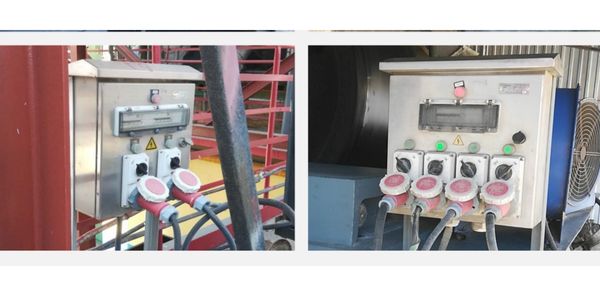
When I first started working in the factory, I saw all the different colored plugs—yellow, blue, red. I thought it was just for looks. I even asked a senior worker why we couldn't make them in more varied colors, like pastels. He laughed and explained that the color is one of the most important safety features12. Each color corresponds to a specific voltage range13, a system standardized by IEC 603093.
Common Industrial Plug Types
| Color | Voltage Range (50/60Hz) | Common Use |
|---|---|---|
| Yellow | 100-130V | Construction sites (e.g., 110V tools) |
| Blue | 200-250V | Standard single-phase equipment, marine |
| Red | 380-480V | Three-phase machinery, motors, pumps |
| Black | 500-690V | High-power industrial applications, mining |
This color-coding system is a simple but brilliant way to prevent catastrophic errors. You physically cannot plug a red (400V) plug into a blue (230V) socket because the keying is different. It's a foolproof safety measure built right into the design.
Which Type of Industrial Plug Fits Different Applications?
Are you unsure which specific plug to order for your project? Matching the plug's specifications—like amperage and IP rating—to the environment is critical for safety and long-term performance.
To choose the right plug, first identify your power needs (amperage14 and voltage). Then, assess the environment to determine the required IP rating6. A dusty workshop might only need IP44, while an outdoor, wash-down area requires the complete waterproofing15 of an IP67-rated plug.
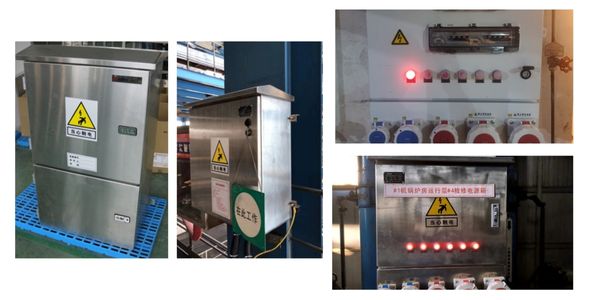
Let's break it down with some practical examples. The choice depends entirely on the electrical load and the operating conditions. A 16A plug is fine for portable tools16, but a large generator will need a 63A or 125A connection. The environment is just as important. IP44 is "splashproof," meaning it can handle water splashes from any direction. IP67 is "watertight," meaning it can be temporarily submerged in water without any leakage. Using an IP44 plug in an area that gets hosed down for cleaning is a recipe for disaster.
Application Matching Guide
| Application | Typical Amperage | Required IP Rating | Recommended Plug Type |
|---|---|---|---|
| Construction Site | 16A - 32A | IP44 | Yellow or Blue, portable plugs and sockets. |
| Food Processing Plant | 32A - 63A | IP67 | Blue or Red, watertight connectors for wash-down. |
| Data Center | 32A | IP44 | Blue, panel-mounted sockets for Power Distribution Units. |
| Marine/Ports | 32A - 125A | IP67 | Blue or Red, corrosion-resistant reefer sockets. |
As an OEM manufacturer, we help clients navigate these choices every day. We often customize solutions, like building a portable distribution box with a mix of 16A and 32A IP67 sockets for an outdoor event company. Understanding the application is the key to providing a safe and effective solution.
Conclusion
Choosing the right industrial plug is crucial for safety and efficiency. By understanding the types, components, and application needs, you can ensure a reliable and secure power connection for any industrial environment.
Discover the characteristics that define heavy-duty connectors and their importance in tough environments. ↩
Explore the unique challenges faced in high-power applications and how to address them. ↩
Learn about IEC 60309 standards to ensure safety and interoperability in industrial electrical systems. ↩
Explore this link to understand the unique features and benefits of industrial plugs for high-power applications. ↩
Find out how this design improves connection security and prevents accidental disconnections. ↩
Explore the significance of IP ratings in determining the suitability of plugs for various environments. ↩
Learn how precise manufacturing tolerances ensure safety and reliability in electrical connectors. ↩
Learn about the importance of cable glands in sealing and protecting electrical connections. ↩
Learn how impact resistance contributes to the longevity and safety of industrial connectors. ↩
Discover how nickel-plated brass enhances conductivity and prevents corrosion in industrial plugs. ↩
Discover the role of corrosion resistance in maintaining the integrity of electrical connections. ↩
Understand the essential safety features that protect both equipment and personnel. ↩
Explore the various voltage ranges to understand which plug is suitable for your application. ↩
Find out how to match amperage requirements to ensure safe and efficient power delivery. ↩
Discover the importance of waterproofing in ensuring reliable performance in wet environments. ↩
Find out which plugs are ideal for portable tools to ensure safety and efficiency on job sites. ↩