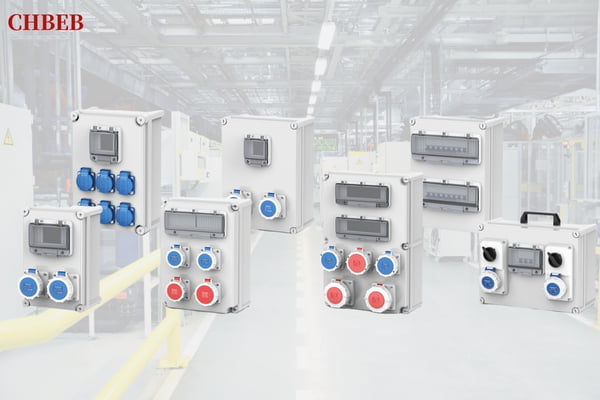
Struggling with messy, unsafe wiring on your projects? A quality socket box1 is the simple, professional solution you need to keep electrical connections secure and organized.
A socket box, also known as an electrical or junction box2, is a protective enclosure3 installed inside walls, floors, or ceilings. Its main job is to house wiring connections4 for switches and outlets, preventing accidental contact, shielding from dust, and containing potential sparks to improve fire safety5.
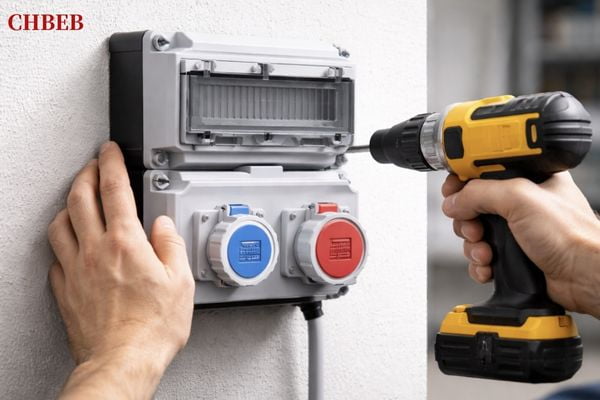
You might think a socket box is just a simple plastic container. I used to think that too, before I got deep into the manufacturing side of things. It turns out, the difference between a good box and a bad one is huge. A bad box can cause major headaches during installation and even create serious safety risks down the line. Let's dig into why these "simple" boxes are actually quite complex and what you need to look for.
Why Is Manufacturing a High-Quality Socket Box So Difficult?
Ever received a batch of socket boxes that just don't fit right? This wastes valuable time and money on-site, causing frustration for your installation teams and delaying your project.
Manufacturing a top-tier socket box is difficult because it demands extreme precision. Key challenges include achieving perfect hole alignment for secure fitting, using certified flame-retardant materials6 for safety, and maintaining a consistent wall thickness for strength without sacrificing its ability to fit inside a standard wall.
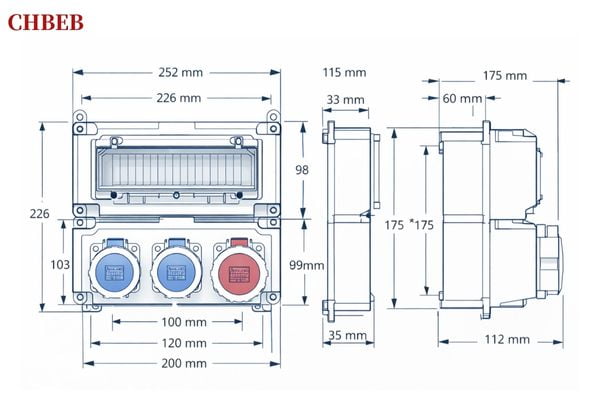
When we first started making socket boxes, I was surprised by how many things could go wrong. It’s not a product you can make with ordinary machinery. It requires a specialized process to meet the strict standards for safety and function. Here’s a breakdown of the main challenges we have to overcome with every single box we produce.
The Challenge of Precision
The holes for screws and mounting the socket itself must be perfectly placed. If they are off by even a fraction of a millimeter, the socket won't sit flush, or the screws won't tighten properly. This can lead to loose connections, which is a major safety hazard. We use high-precision molds and post-production calibration to ensure every hole is exactly where it should be.
The Importance of Material Science
The material is not just any plastic. It must be strong enough to withstand impact during installation and throughout its life. More importantly, it must be flame-retardant. If a wire overheats, the box must contain the problem and not catch fire. We use high-quality PA66 or PC materials that are specifically engineered for thermal resistance and self-extinguishing properties.
The Balancing Act of Wall Thickness
The thickness of the box's walls is a critical balancing act. If the walls are too thin, the box will be flimsy and could crack under pressure. If they are too thick, it won't fit properly into the standard depth of a wall cavity. We achieve a uniform thickness through advanced injection molding techniques, ensuring the box is both robust and easy to install.
| Feature | High-Quality Socket Box | Low-Quality Socket Box |
|---|---|---|
| Hole Alignment | Perfectly aligned for easy install | Misaligned, causing fitting issues |
| Material | Strong, flame-retardant (PA66/PC) | Brittle, flammable plastic |
| Wall Thickness | Uniform and consistent | Uneven, either too thin or too thick |
| Durability | Resists cracking and deformation | Cracks easily under pressure |
What Are the Key Steps in Making a Flawless Socket Box?
You might assume all socket boxes are made the same way. But production shortcuts lead to faulty products that fail on the job, damaging your reputation and creating risks.
A flawless socket box is made in three stages. It starts with injection molding to form the basic shape. The most vital step is next: high-precision hole calibration to correct for plastic shrinkage. The final stage involves finishing and quality control to ensure it meets fire safety5 standards.
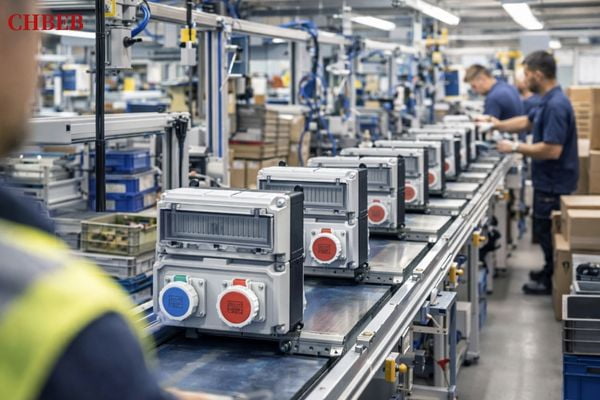
Making a socket box that we can stand behind involves a very controlled process. I've spent countless hours on our factory floor, and I can tell you that the second step is where most manufacturers fail. Let me walk you through how we do it right.
Step 1: Precision Injection Molding
The first step is to create the basic shape of the box. We do this by injecting a special flame-retardant raw material into a custom-designed mold. The temperature and pressure must be perfectly controlled to ensure the material flows evenly and fills every part of the mold. This step lays the foundation for the box's final strength and shape. Any error here will be magnified later.
Step 2: The Critical Calibration Phase
This is the hardest and most important part. As the hot plastic cools, it naturally shrinks. This shrinkage can pull the screw holes and mounting points out of alignment. To fix this, we use high-precision machinery to re-calibrate every hole after the box has cooled. This ensures that when you get the box, the socket will snap in perfectly and the screws will tighten securely. Many factories skip or rush this step to save money, which is why their boxes are so frustrating to install.
Step 3: Final Touches and Quality Control
After calibration, the box goes through final checks. We might add another flame-retardant coating to enhance its safety properties. Then, each box is inspected for any defects, like cracks or warping. We conduct batch tests for flame resistance and impact strength to guarantee that every box leaving our factory meets our high standards and global certifications like CE and TUV.
Does It Matter Where Your Socket Boxes Are Made?
Looking for a reliable supplier but unsure where to start? Sourcing from the wrong manufacturing region can lead to inconsistent quality, shipping delays, and products that don't meet standards.
Yes, the manufacturing location7 is very important. Top-tier factories are often found in industrial hubs8 like the areas around Shanghai and the coast of Fujian in China. These regions have mature supply chains for precision molds and advanced machinery, ensuring a much higher quality product.
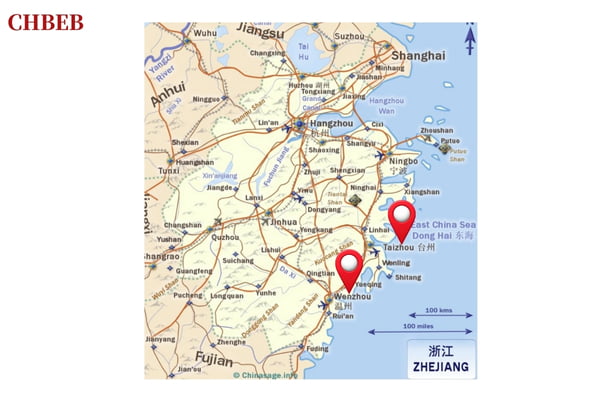
I've visited factories all over, and there's a clear difference. The location of your supplier tells you a lot about the quality you can expect. It's not about geography itself, but about the industrial ecosystem that has been built up in certain areas over decades.
The Power of an Industrial Ecosystem
Regions like Wenzhou and Taizhou, where our manufacturing bases are, are hubs for the electrical industry. This means we have direct access to the best mold makers, the most advanced injection molding machines, and a workforce with decades of experience. When we need a new mold designed or a machine serviced, the experts are right next door. This ecosystem allows us to innovate faster and maintain a higher level of quality control than factories in isolated areas.
The Risks of Sourcing from Underdeveloped Regions
In contrast, some factories in other regions might use older equipment and less refined processes. They may not have access to the same level of expertise for mold making or material science. This often results in products with the exact problems we've been discussing: misaligned holes, inconsistent wall thickness, and questionable material safety. While their prices might seem lower at first, the costs of installation problems and safety risks are much higher in the long run. Choosing a partner from a proven industrial region is a safer bet for your business.
| Manufacturing Region | Advantages | Disadvantages |
|---|---|---|
| Wenzhou/Taizhou (Our Base) | Mature supply chain, expert labor, advanced tech | Higher initial cost reflects quality |
| Other Inland Regions | Lower labor costs | Outdated equipment, inconsistent quality, logistical challenges |
How Can You Tell a Good Socket Box from a Bad One?
A client is questioning the quality of your components. You need to prove that your products are superior, but you're not sure how to demonstrate the difference clearly.
You can spot a good socket box by its feel and fit. It feels solid with uniform walls. Sockets and screws fit smoothly into perfectly aligned holes. The ultimate test is safety: a quality box will immediately self-extinguish after being exposed to a flame, proving its superior fire-retardant properties.
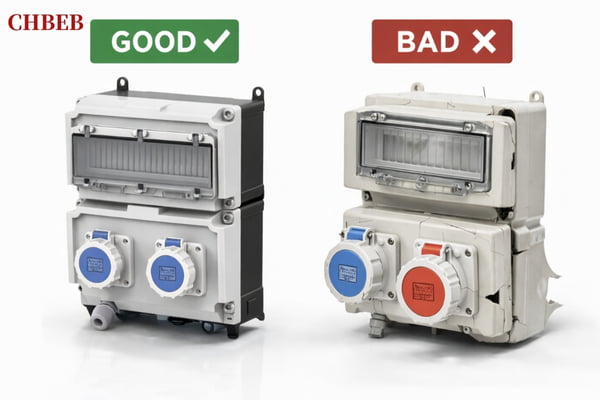
I want to share a story about a client from Malaysia. It perfectly illustrates how to tell good from bad. This experience showed me that seeing is believing, especially when it comes to product quality.
A Client's Search for Reliability
This client, an EPC contractor, was having major issues with their local supplier. Their socket boxes were causing constant problems on-site. Some would crack during installation, and others were so warped that the sockets wouldn't fit. They flew to China to visit our factory, skeptical but hopeful. They brought a few of their old boxes with them for comparison.
The On-Site Inspection
In our workshop, we put our socket box next to theirs. The difference was immediately obvious. Theirs felt flimsy, and you could see how the wall thickness was uneven. When we tried to press on it, it bent easily. Our box, on the other hand, was rigid and solid. I handed it to the client, and he couldn't bend it no matter how hard he tried. Next, we took a standard wall socket. It slid into our box with a satisfying click. When we tried to put it in his box, it got stuck—the holes were clearly misaligned from shrinkage.
The Decisive Difference: A Simple Flame Test
The final test was the most important. I took a lighter to his box, and it quickly caught fire and continued to burn, releasing black smoke. Then, I did the same to our box. It resisted the flame, and the moment I pulled the lighter away, the flame went out on its own. The client's eyes went wide. He said, "Your quality is so much better. We will place our order with you." That was three years ago, and they are still one of our most loyal partners.
Conclusion
A simple socket box is not so simple. Choosing a quality-focused manufacturing9 partner ensures safety, saves installation time, and protects your project's reputation in the long run.
About CHBEBplugs
CHBEBplugs is the industrial plug and socket brand under the CHBEB Group, backed by over 60 years of power industry experience. We specialize in export-oriented B2B manufacturing of industrial plugs, sockets, socket boxes, and power connection systems. Supported by China’s mature electrical industry clusters, we provide IEC-compliant products, OEM/ODM customization, and stable large-volume supply for global EPC and industrial projects.
Understanding socket boxes is crucial for safe electrical installations and ensuring quality connections. ↩
Explore the distinctions to choose the right type for your electrical projects. ↩
Learn how protective enclosures enhance safety and organization in wiring. ↩
Discover best practices for ensuring safe and reliable wiring connections. ↩
Explore essential fire safety measures to protect your projects from hazards. ↩
Understanding these materials can help you choose safer electrical components. ↩
Discover why sourcing from the right regions is crucial for quality assurance. ↩
Learn how industrial hubs enhance manufacturing efficiency and quality. ↩
Understanding this approach can lead to better products and customer satisfaction. ↩