
Tired of production stopping because a small switch failed? This tiny part can cause big problems, costing you time and money. Let's fix that.
A cam switch1 is an industrial "gear selector" for electrical circuits. By rotating a knob, you turn an internal cam that opens and closes contacts, controlling functions like motor start/stop or speed changes. It's the manual command center for your equipment's electrical operations.
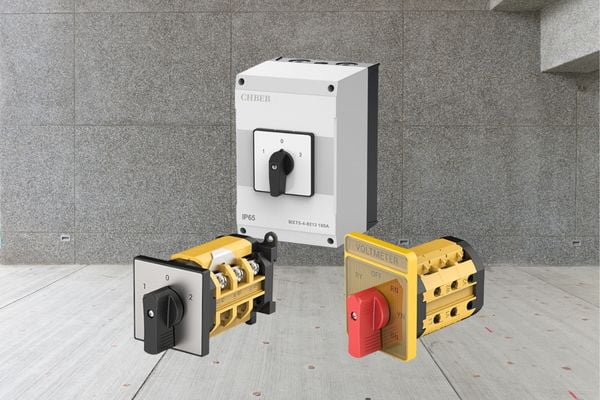
What Is a Cam Switch and How Does It Work?
A cam switch is a manual rotary switch used in industrial control circuits to change circuit connections by rotating an internal cam mechanism. It is commonly used for motor control, function selection, and circuit switching in industrial equipment.
You might think a switch is just a switch. In industrial environments, selecting the wrong cam switch can bring an entire production line to a halt. It's a small component that carries a huge responsibility. Let's break down the most common cam switch failure modes and, more importantly, how they can be avoided in industrial environments.
Why do so many cam switches fail in harsh environments?
Your switch works fine in the lab, but fails on the factory floor. Heat, dust, and moisture are silent killers for standard electrical components, causing unexpected downtime.
Cam switches often fail in harsh environments because their materials and design are not up to the task. Standard plastic shells can crack in high heat, while dust and moisture cause internal rust and short circuits. Contacts can also burn out from frequent, heavy use.
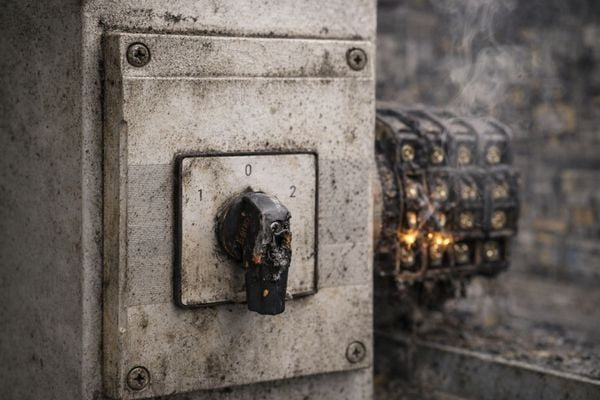
This type of failure is common across many industrial facilities. In many cases, production disruptions can be traced back to a failed cam switch caused by contact burnout or material degradation.
Contact Burnout and Arcing
When a switch has to control a large motor, the electrical load is huge. If the contacts are made from cheap material, they simply can't handle the current. They start to oxidize, heat up, and create an arc—a small spark of electricity. This spark slowly eats away at the contact surface. This leads to a poor connection and, eventually, total failure. This failure mode is commonly observed in applications such as water pump control systems, where switches may stop working unexpectedly.
Mechanical Failure and Slipping
Think about the solid "click" you feel when you turn a quality switch. That's the mechanism locking firmly into place. If the internal parts are not precisely made, or if they wear down over time, you lose that positive click. The switch can get stuck between positions or even "slip" out of gear. On an automated production line, this is a disaster. It could mean a machine gets the wrong command, like stopping instead of slowing down, potentially causing a crash or ruining a batch of products.
Environmental Breakdown
A switch is only as good as its housing. In a hot metallurgy plant or a damp food processing facility, a standard switch is a ticking time bomb. High temperatures can warp the plastic casing, causing it to crack. Moisture and dust then get inside. This corrodes the delicate metal parts and compromises the insulation, which can lead to dangerous electrical leaks and a complete breakdown of the switch.
| Failure Type | Root Cause | Real Impact |
|---|---|---|
| Contact burnout | Low-grade contact material | Motor stops unexpectedly |
| Mechanical slipping | Worn cam or poor tolerance | Incorrect machine commands |
| Environmental damage | Heat, dust, moisture ingress | Complete switch failure |
How Are Durable Cam Switches Manufactured?
Are you frustrated with switches that need constant replacement? The secret to a durable switch is not magic. It's all about a meticulous manufacturing process from start to finish.
We build a lasting cam switch by focusing on three areas: using superior materials like silver-nickel for contacts, precision CNC machining for core parts, and a flawless assembly process. Every component is designed and put together to withstand a tough industrial life, not just to pass a lab test.
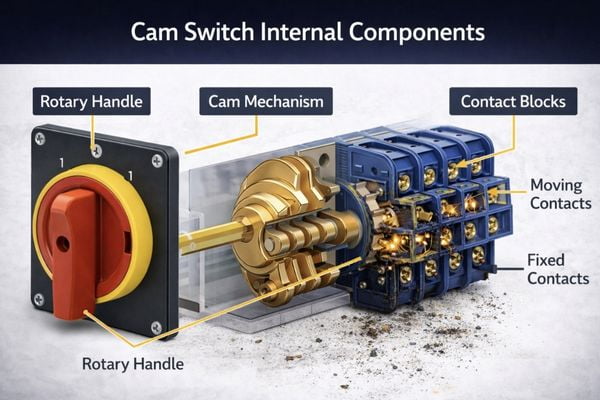
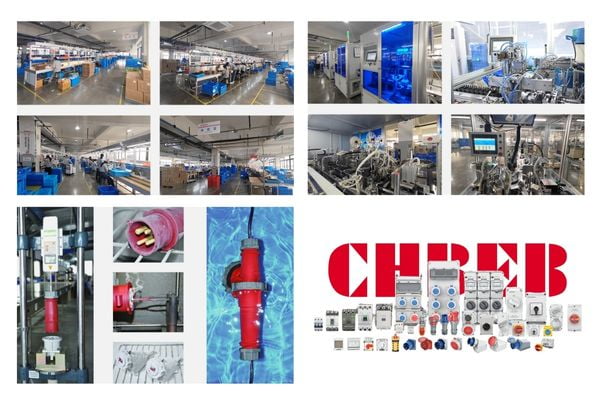
Building a reliable switch is a craft. It's not about just slapping parts together. At our facility, we control every single step, from the raw material to the final testing. This is how we ensure that the switch you install will not fail you. Here’s a look at how we do it.
| Step | Our Focus | Why It Matters for You |
|---|---|---|
| 1. Core Part Machining | We use high-precision CNC machines to shape the cams from stainless steel. Contacts are stamped from a durable silver-nickel alloy. | This ensures every turn of the knob is precise and repeatable for its entire life. The right materials prevent the contacts from burning out under heavy motor loads. |
| 2. Precise Assembly | Our technicians assemble a copper alloy shaft sleeve with high-temp lubricant. They carefully set the contact pressure to a specific force (around 2.5N). | This guarantees a smooth, non-sticking rotation. The right contact pressure ensures a solid electrical connection without causing premature wear on the parts. |
| 3. Rigorous Testing | Every single switch goes through electrical, mechanical, and environmental tests. This includes a 100,000-cycle life test and high-voltage insulation checks2. | This isn't a spot-check. We simulate years of hard use to make sure the switch won't fail you when it's installed in your most critical equipment. |
| 4. Protective Sealing | For harsh environments, we use an IP65-rated housing with waterproof glue and sealed connectors. | This creates a fortress around the internal mechanism, keeping out the dust, moisture, and heat that destroy lesser switches. It's the final step to ensure total reliability. |
This end-to-end process ensures that when you install one of our switches, it’s not a liability. It’s a long-term, reliable part of your system that you can trust.
Can a custom switch really boost a factory's productivity?
Case Study: High-Temperature Cam Switch Failure in a Metallurgy Plant
A metallurgy plant was losing over 30,000 RMB monthly from constant production stops. The culprit? A simple motor control switch that could not handle the heat and dust.
Yes, a custom switch3 can dramatically boost productivity. We designed a heat and dust-resistant cam switch for a metallurgy plant, cutting their monthly downtime from 10 instances to just one. This single change increased their production efficiency by 20% and saved them over 300,000 RMB annually.
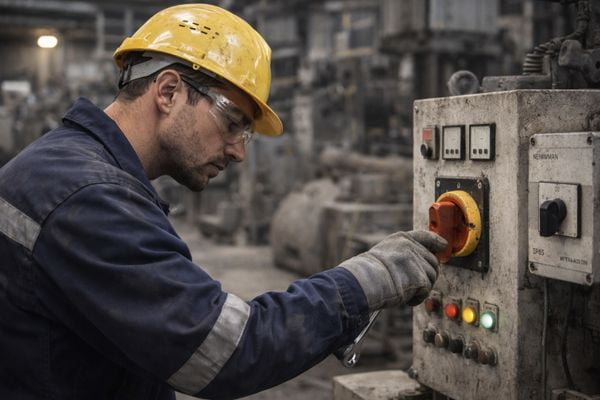
A plant manager contacted us after repeated cam switch failures brought production to a halt. His factory floor was extremely hot—often reaching 80°C—and filled with conductive dust. The standard cam switches on his motor controls were failing every few months, causing chaos.
The Problem
Their switches suffered from contact burnout, slipped positions, and warped casings. Each failure meant stopping the entire line, which was a huge financial loss. They were stuck in a cycle of constant repair and replacement.
Our Solution
We did not just sell them a stronger switch; we engineered a specific solution for their environment.
- Material Upgrade: We used a hardened stainless steel cam and thicker silver-nickel contacts to fight the extreme heat and prevent electrical arcing.
- Protective Design: We housed the mechanism in a special high-temperature plastic shell with a full IP65 dust-and-waterproof seal.
- Targeted Testing: Before shipping, we put the custom switches through a 48-hour, 85°C aging test to prove they could survive their exact working conditions.
The Result
The new switches worked flawlessly. The plant manager told me their maintenance costs plummeted. More importantly, their production became stable and predictable. They went from constant fire-fighting to smooth, uninterrupted operations. This case proves that investing in the right component is not a cost—it's a direct investment in your productivity and peace of mind.
Conclusion
Cam switch failures are usually caused by poor materials, weak contact design, and inadequate environmental protection. Selecting a cam switch engineered for real industrial conditions is essential for ensuring stable operation, safety, and long-term productivity in demanding applications.
About CHBEBplugs
CHBEBplugs is the industrial plug and socket brand under the CHBEB Group, backed by over 60 years of power industry experience. We specialize in export-oriented B2B manufacturing of industrial plugs, sockets, socket boxes, and power connection systems. Supported by China’s mature electrical industry clusters, we provide IEC-compliant products, OEM/ODM customization, and stable large-volume supply for global EPC and industrial projects.
Understanding cam switches is crucial for optimizing electrical operations in industrial settings. ↩
Understanding high-voltage insulation checks can help ensure safety and reliability in electrical systems. ↩
Discover how custom switches can enhance productivity and reduce downtime in industrial settings. ↩