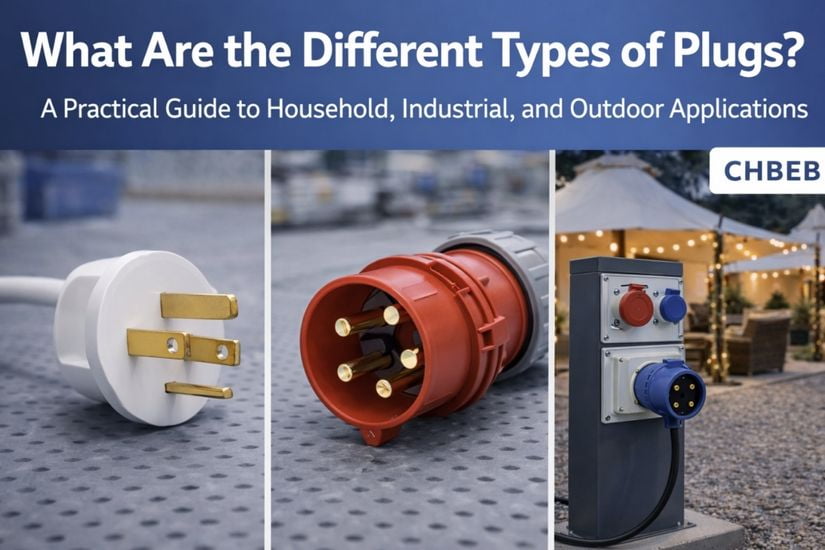
You probably think all plugs are the same. But using the wrong one can damage your equipment, or worse, create a serious safety hazard. It's time to understand the differences.
Plugs are not one-size-fits-all. They fall into three main categories based on their intended use: household, industrial, and outdoor. Each type is designed with specific current ratings, materials, and protection levels (like IP ratings) to ensure safety and performance in its environment.
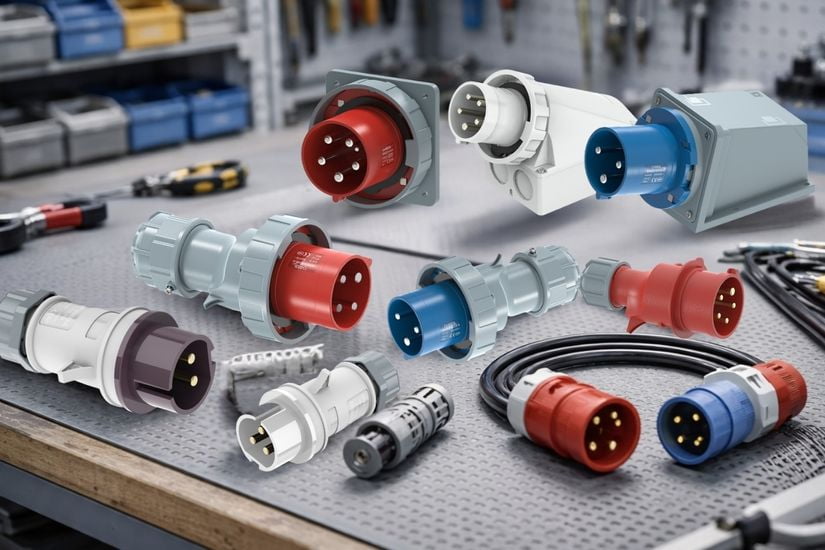
When I first started in the industrial power industry nearly eight years ago, I thought a plug was just a plug. It took me a while to realize how specialized they are. Now, whenever I train new employees, the first lesson is always the same: you must understand the basic types. Getting this right is the foundation for everything else. Let's break it down so you can see what I mean and avoid common, costly mistakes.
What are the common types of plugs and how do you tell them apart?
It's frustrating when you have a plug that just won't fit or work. Choosing the wrong one can lead to malfunctions or safety hazards. Here’s a quick guide.
Plugs are mainly categorized by use (household, industrial, outdoor), protection (IP441/IP672), and current (10A/16A/32A+). Household plugs are small, industrial ones are robust for high power, and outdoor plugs are built to be waterproof and dustproof.
To really understand plugs, you need to look at them from a few different angles. It’s the best way to make sure you select the right product for the right job. I always tell my team to think about three key factors.
By Use Case
First, where will the plug be used? This is the most important question.
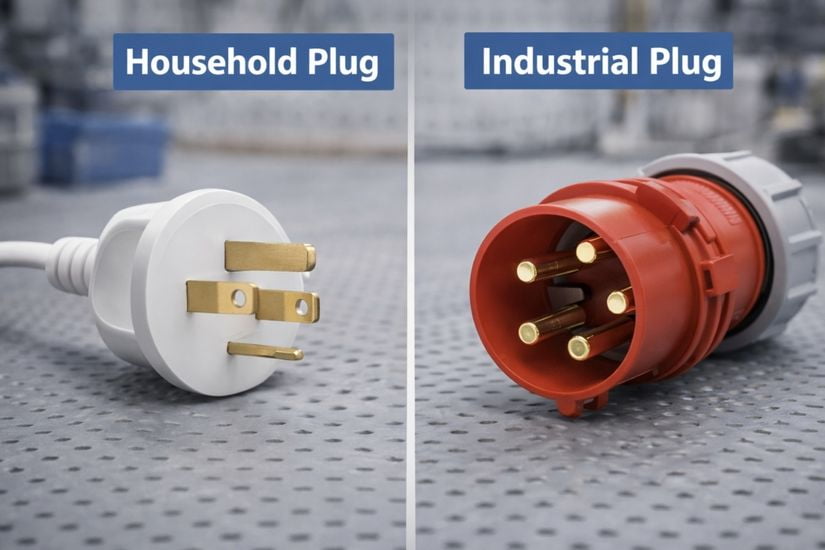
- Household Plugs3: These are the ones you know best. They have two or three prongs and are used for things like phone chargers and home appliances. They are small and designed for lower currents, usually 10A or 16A.
- Industrial Plugs4: These are the heavy-duty versions. They have thick pins and a tough outer shell. You'll find them in factories and on construction sites, powering large machinery. They are built to handle high currents (16A, 32A, and up) and withstand rough handling.
- Outdoor Plugs5: These plugs often come with a protective cap. Their main job is to be waterproof and dustproof. They are perfect for garden lights or outdoor equipment because they can handle rain and dirt without failing.
By Protection Level (IP Rating)
The IP rating tells you how well a plug is sealed against solids and liquids.
- IP44: This means the plug is protected against splashing water and solid objects larger than 1mm. It's good for indoor areas or covered balconies where it might get a little wet.
- IP67: This is much more robust. An IP67-rated plug is completely dust-tight and can be submerged in 1 meter of water for 30 minutes. This is essential for truly outdoor or very wet environments.
By Current Rating
Finally, how much power does it need to handle? The current rating, measured in amps (A), is critical.
- 10A: Used for low-power household items.
- 16A: Common for higher-power appliances like air conditioners or water heaters.
- 32A and above: Reserved for industrial machinery and heavy equipment.
A simple rule is that a higher current rating means thicker pins. This ensures a secure connection that can handle the electrical load safely. Choosing the wrong plug is not just an inconvenience; it can destroy your equipment or create a fire risk.
| Category | Typical Use | Current Rating | Key Feature |
|---|---|---|---|
| Household | Home appliances, chargers | 10A / 16A | Small, convenient |
| Industrial | Factory machinery, tools | 16A - 125A | Robust, high-impact resistance |
| Outdoor | Garden lights, events | 10A / 16A | Waterproof, dustproof (IP67) |
| IP44 | Indoor/covered areas | Varies | Splash-proof |
| IP67 | Wet/outdoor environments | Varies | Fully waterproof and dust-tight |
What are the most frustrating problems with low-quality plugs?
A cheap plug seems like a good deal at first. But soon it starts disconnecting, shorts out in the rain, or simply cracks in your hand. These failures are frustrating and avoidable.
The biggest issues with cheap plugs are poor contact from loose pins, causing power loss and fire risk. Bad sealing also leads to short circuits from water and dust. Finally, cheap materials crack, deform, or oxidize, compromising both safety and performance.
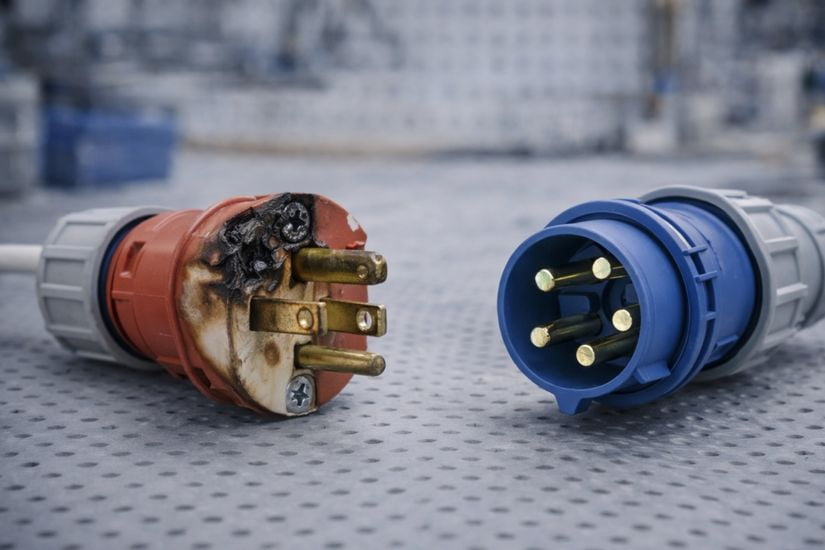
Don't underestimate this small component. In my experience, I've seen countless projects derailed by what seems like a minor part. Most of the time, the problems come down to three manufacturing failures that budget suppliers just can't get right.
Poor Contact and Intermittent Power
This is the most common complaint. The metal pins inside the plug are loose or not spaced correctly. When you plug it in, the connection is weak. Your device might flicker on and off, or your phone stops charging intermittently. This isn't just annoying. A bad connection generates heat, which can melt the plug's housing and even start a fire. It’s a huge safety risk that stems from a lack of precision in manufacturing.
Inadequate Waterproofing and Dust-proofing
For any plug used outside or in a damp area like a kitchen, proper sealing is non-negotiable. Low-quality plugs have gaps in their housing or use cheap seals that fail quickly. The first time it gets splashed with water or exposed to rain, it shorts out. I’ve seen outdoor plugs rust and fail in less than six months because they weren't sealed correctly. This leads to constant replacements and potential electrical hazards.
Non-Durable Materials
The materials used are just as important as the design. Many manufacturers use cheap, standard plastic for the outer shell. This plastic can become brittle in cold weather and crack easily, or it can deform under the hot sun. The metal pins are another weak point. If they are made from a low-grade alloy, they will oxidize and turn black within a year. This oxidation layer increases electrical resistance, making the plug less efficient and causing it to heat up over time. A good plug should feel solid and use high-quality, resilient materials.
What key manufacturing steps ensure a plug is high-quality and reliable?
You might assume all plugs are made the same way. But many factories cut corners on critical steps, which is why so many plugs fail prematurely. Let's look at the three hurdles.
A quality plug requires three key steps: precise shell injection molding with durable materials, meticulous contact assembly and calibration for a perfect fit, and rigorous sealing and pressure testing to guarantee protection against water and dust.
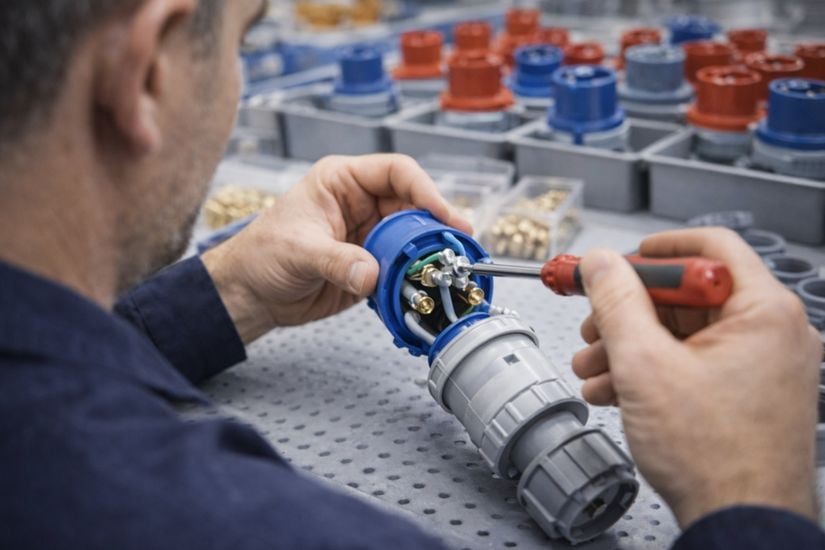
Making a plug that you can trust involves a lot more than just snapping pieces together. There are three core processes where quality is either won or lost. Any mistake here means the final product will not be reliable.
Shell Injection Molding
This is the foundation. We start by using high-quality modified plastics, like PA66, that are flame-retardant and resistant to both high and low temperatures. This material is injected into a precision-engineered mold. The key here is to ensure the wall thickness of the plug's shell is perfectly uniform. If it's too thin, it will crack under pressure. If it's too thick, it won't fit properly into a socket. It has to be just right.
Contact Assembly and Calibration
This is the hardest part, and where many small factories fail. After the metal pins (contacts) are inserted into the shell, they must be perfectly calibrated. We use specialized equipment to adjust the spacing between the pins to a tolerance of less than 0.05mm. This guarantees a stable, secure connection. The insertion force is also critical. If it's too loose, you get poor contact. If it's too tight, you can't plug it in. We then test the electrical conductivity to ensure it's stable. If a plug fails any of these checks, it's scrapped.
Sealing and Testing
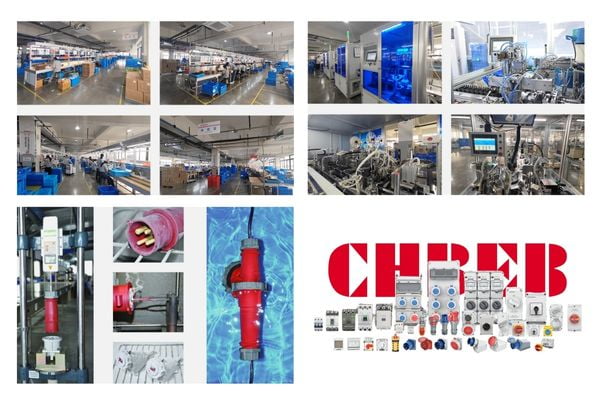
This step is crucial for safety, especially for outdoor plugs. We install high-grade rubber sealing rings. For IP67 models, we add an extra waterproof gasket. Then, the testing begins. We spray the plugs with high-pressure water jets and blast them with dust to simulate harsh conditions. Afterward, we run electrical tests to check for any leakage. The IP67 plugs are even fully submerged in water. Any plug that doesn't pass these tests is destroyed. There is no room for compromise on safety.
How does superior manufacturing solve real-world problems for customers?
You've probably experienced plug failures yourself. This leads to customer complaints, high maintenance costs, and serious safety risks. Let me share a quick story about a client from Thailand.
A Thai resort client faced constant short circuits and loose connections with their outdoor plugs. By choosing our IP67 plugs with precise contact calibration, they eliminated these failures, reduced maintenance costs, and greatly improved guest safety.
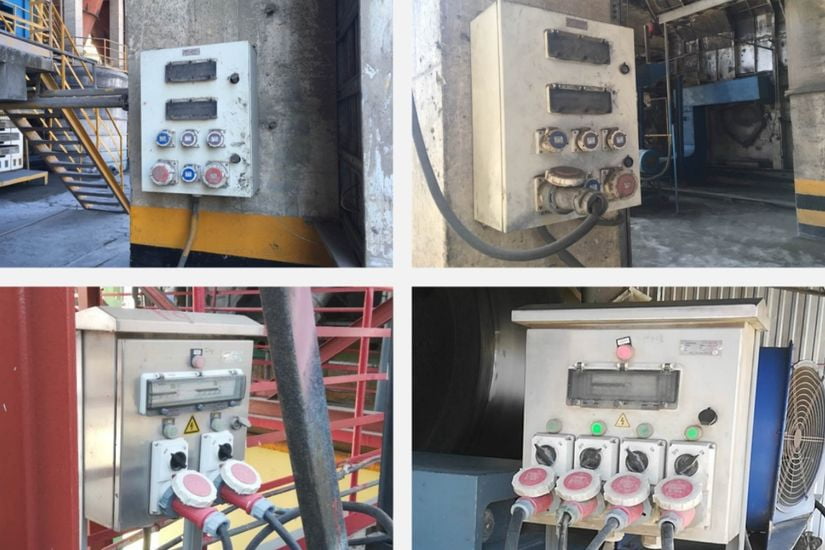
Real-world applications are the ultimate test of quality. A few years ago, a client from Thailand who runs a chain of outdoor resorts came to us. He was having a terrible time with his power connections.
The Client's Challenge
His resorts had lights and charging outlets on outdoor balconies. During Thailand's rainy season, the humidity and heavy rain were causing constant problems. The plugs he was using would short-circuit after just three months. He told me about guests complaining that their phones would stop charging when it rained. In the public areas, plugs were used so frequently that the pins would become loose in six months, leading to poor connections and more complaints. He even flew to our factory and brought two "bad samples" with him: one was burnt black from water damage, and the other had wobbly pins.
The On-Site Demonstration6
In our workshop, he paid close attention to two processes. First was our contact calibration. He saw our CNC equipment adjust pin spacing to a tolerance of 0.03mm, twice as strict as his local standard. He watched as we performed a 500-cycle insertion test on our plug, and the pins remained tight. His sample was loose after just 200 cycles. Next, we demonstrated our sealing test. We took one of our standard 16A IP67 plugs and blasted it with a high-pressure water gun for five minutes. After wiping it dry, we plugged it into a lamp. The light stayed on without a single flicker. When we tried the same with his damaged sample, the circuit breaker tripped immediately.
The Result
The client was convinced. He could feel the difference in the quality of our materials and see the precision of our work. He said, "Your plug's contact precision and waterproofing are so much better than what we've been using." He signed a two-year supply contract on the spot for our 10A household and 16A IP67 outdoor plugs. A year and a half later, he told me they haven't had a single short circuit during the rainy season, and their maintenance costs were cut in half. He even placed a new order for a seaside resort, because he trusts our plugs to withstand the salty, corrosive air.
Conclusion
Choosing the right plug isn't just about fit. It’s about understanding its purpose, construction, and quality to ensure safety, reliability, and long-term performance for your project.
About CHBEBplugs
CHBEBplugs is the industrial plug and socket brand under the CHBEB Group, backed by over 60 years of power industry experience. We specialize in export-oriented B2B manufacturing of industrial plugs, sockets, socket boxes, and power connection systems. Supported by China’s mature electrical industry clusters, we provide IEC-compliant products, OEM/ODM customization, and stable large-volume supply for global EPC and industrial projects.
Understand the IP44 rating and its importance for plugs used in indoor and covered areas. ↩
Find out why IP67 rated plugs are essential for outdoor and wet environments. ↩
Explore the unique features of Household Plugs to ensure safety and compatibility with your devices. ↩
Learn about the robust design of Industrial Plugs that can handle high power and tough environments. ↩
Discover how Outdoor Plugs are designed to be waterproof and dustproof for reliable outdoor use. ↩
Discover the insights gained from on-site demonstrations that showcase plug quality. ↩