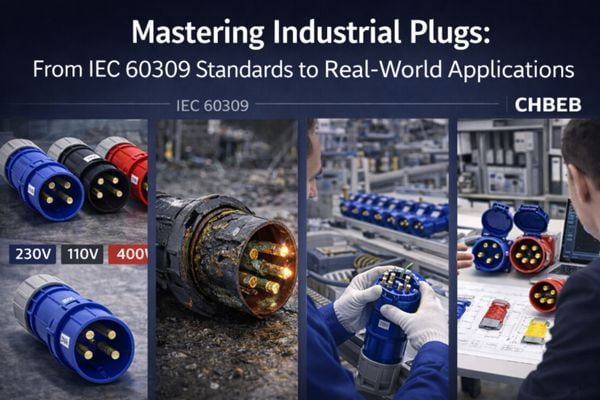
Struggling with industrial plug failures? Incompatible standards like IEC 60309 cost time, money, and safety. We provide the essential knowledge to ensure safety and reliability in your industrial connections.
Mastering industrial plugs involves understanding key standards like IEC 60309, identifying common pain points such as poor compatibility1, and controlling critical manufacturing processes from raw material selection2 to final testing. This ensures your connections are safe, reliable, and perfectly matched to your application's needs.
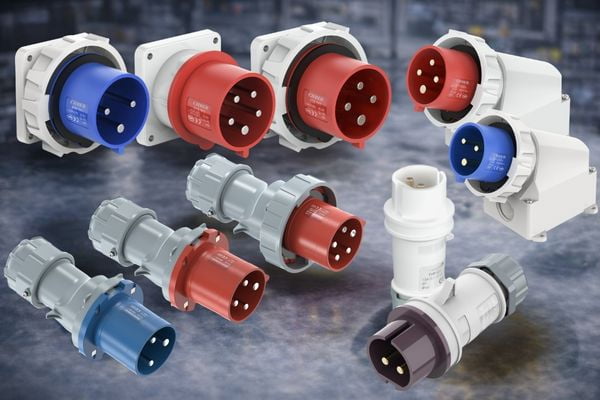
This guide will walk you through everything you need to know, from the foundational standards to practical applications. In industrial power projects, a deep understanding of standards and manufacturing details often determines whether a system operates reliably or fails prematurely. Let's start with the foundation that everything else is built on.
What standards govern industrial plugs (IEC 60309, UL, GB)?
Confused by different plug standards? Choosing the wrong one can lead to project delays and safety risks. Here’s how we navigate the most important ones for our partners.
The core international standard is IEC 60309, which ensures global compatibility. National standards like GB/T 11918 (China) and regional ones like UL 498 (US) add specific requirements. Matching the right standard to your market and application is critical for compliance and safety.
In practice, industrial plug standards are not purely theoretical; they directly affect real-world safety, compatibility, and long-term reliability. A plug that "meets the standard" on paper can still fail in the field if it's not manufactured correctly. The goal of these standards is to guarantee safety, reliability, and interchangeability under heavy industrial loads and in harsh environments. Effective compliance with industrial plug standards typically involves three key areas. First, we have the mainstream standards. Second, we have practical checks to ensure compliance. You need to know how to spot a product that truly follows the rules. It's about more than just a stamp on the product.
Mainstream Core Standards
Industrial plug suppliers serving global markets must comply with multiple international and regional standards. The most common one is IEC 60309. It's the global benchmark. For projects in China, we follow GB/T 11918, which is based on the IEC standard but has local requirements. For exports to the US or EU, we must meet UL 498 and BS EN 60309, respectively. Each has unique demands.
| Standard | Key Focus | Practical Note for Partners |
|---|---|---|
| IEC 60309 | International compatibility for plugs from 16A to 630A. Defines pins, dimensions, IP ratings, and temperature limits. | You must select the exact model for your voltage and current. A 16A plug won't fit a 32A socket. |
| GB/T 11918 | China's national standard, equivalent to IEC 60309. Adds local requirements like RoHS compliance. | All products for the Chinese market must have a clear CCC certification mark on the housing. |
| UL 498 / BS EN 60309 | US and EU standards for export. They have differences in grounding, flame retardancy, and material tests. | We adapt our designs. For example, EU standards require higher UV resistance for outdoor plugs. |
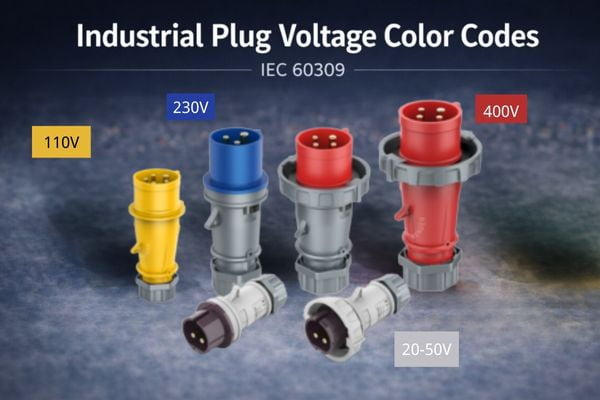
IEC 60309 Industrial Plug Color Code & Rating Quick Reference Table
The IEC 60309 standard defines industrial plug current ratings, voltage ranges, and color codes to prevent mismatching and improve safety in industrial environments.
| Rated Current | Rated Voltage | Color Code | Typical Applications |
|---|---|---|---|
| 16A | 110–130V / 220–250V | Yellow / Blue | Portable tools, site lighting |
| 32A | 220–250V / 380–415V | Blue / Red | Industrial machinery, compressors |
| 63A | 380–415V | Red | Welding equipment, heavy machines |
| 125A | 380–415V | Red | Large power distribution, generators |
Always verify the exact voltage, current rating, and clock position before selecting an IEC 60309 plug or socket for your application.
Core Points of Standard Practice
Beyond the paperwork, we verify three things to confirm a plug is truly compliant. First, key dimensions like pin diameter and spacing must have a tolerance within ±0.1mm. This guarantees it will fit any compliant socket. Second, the IP rating must be real. An IP67 plug must pass a full water immersion test without any leaks. Third, it must pass a temperature rise test. Under full load for an hour, the housing temperature shouldn't rise more than 40K. These checks separate quality products from the rest.
What are the biggest pain points in the industrial plug industry?
Tired of plugs that fail in harsh conditions or don't fit? These common issues disrupt operations and create safety hazards. Let's look at the root causes we see every day.
The biggest pain points are poor compatibility from inconsistent manufacturing, short lifespan due to low-quality materials, lack of quality control leading to failures, and slow response to customization needs. These issues often stem from cost-cutting and a lack of technical expertise in production.
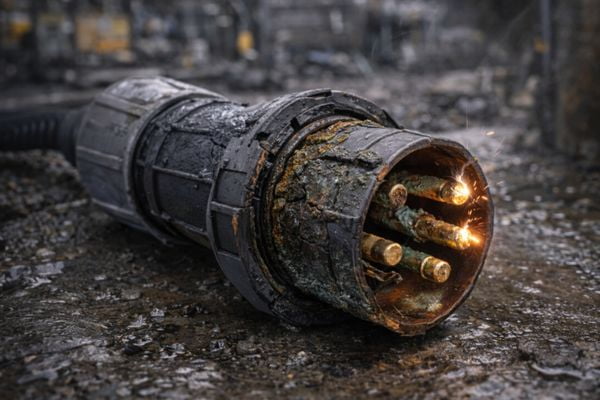
As a manufacturer, we see these problems from both the production and application sides. A factory might cut corners to lower prices, but this creates huge problems for the end-user, like an EPC contractor or an equipment builder. The result is downtime, safety risks, and a damaged reputation. For our OEM partners, these issues are unacceptable. That's why we built our processes to solve these pain points directly. It's not just about making a plug; it's about making a plug that won't fail when it matters most.
Common Industry Problems and Their Causes
We've identified four high-frequency pain points that our partners often face before working with us. Understanding them is the first step to avoiding them.
| Pain Point | Common Cause | Practical Impact on Your Business |
|---|---|---|
| Standard Confusion & Poor Compatibility | Some factories don't follow strict dimensional tolerances3 or modify designs to save money. They lack knowledge of international standard variations. | Equipment can't be powered, or worse, short circuits occur. Export shipments get rejected, leading to costly rework. |
| Short Lifespan in Harsh Environments | Using cheap materials like standard ABS instead of durable PC/PA. Poorly designed seals that can't handle temperature, chemicals, or UV light. | Plugs crack, corrode, or lose insulation in less than a year. This leads to frequent replacement and unplanned downtime. |
| Poor Consistency & Quality Control | No Standard Operating Procedures (SOPs) for key processes. Reliance on visual checks instead of automated testing for things like insulation resistance. | High defect rates in a single batch. Some plugs are hard to insert, while others are loose, leading to unreliable connections. |
| Slow Response to Custom Needs | Lack of in-house R&D and modular design capabilities. A slow supply chain for specialized materials like high-purity copper or high-temp silicone. | Custom projects for new applications (like EVs or robotics) take 30-45 days to deliver, and the final product may not even meet performance specs. |
What are the key manufacturing processes for a reliable industrial plug?
Worried about the quality of your supplied plugs? Inconsistent manufacturing can lead to hidden dangers. We'll show you the critical processes that guarantee a reliable product.
Key processes include strict raw material screening (PC/PA for shells, oxygen-free copper for prongs), precision prong machining, high-quality shell injection molding, and 100% assembly and insulation testing. Each step requires strict quality control to ensure safety and durability.
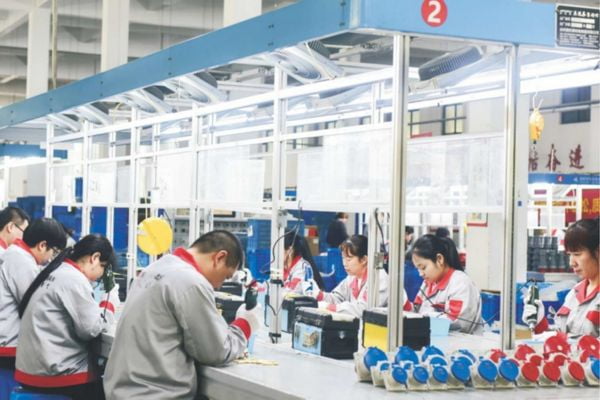
Over our 60-year history, we've learned that you can't inspect quality into a product at the end. It has to be built in from the very beginning. For us, that starts with the raw materials. A great design made with poor materials will always fail. That's why we have rigid standards for every step, from the plastic pellets and copper rods that arrive at our factory to the final packaged plug that ships to our partners. This is how we ensure consistency and reliability, batch after batch.
Our Key Processes and Quality Controls
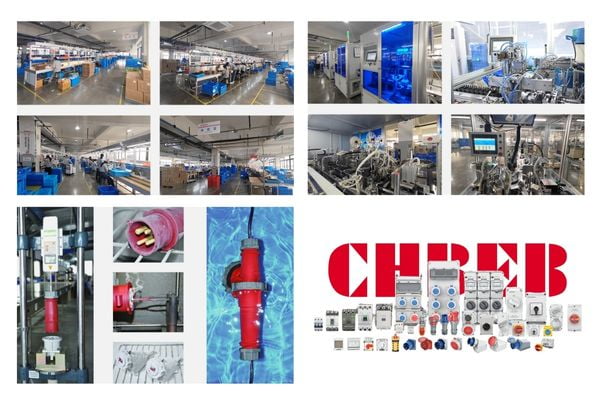
We control the entire manufacturing chain in-house. This gives us complete oversight of quality at every stage.
| Process Step | Practical Focus | Quality Control Standard |
|---|---|---|
| 1. Raw Material Screening | We use V0 flame-retardant PC/PA for shells and oxygen-free copper for prongs. Materials are dried to remove moisture before use. | Every batch of raw material is checked against the supplier's test report. We keep samples for traceability. Non-compliant materials are rejected. |
| 2. Prong Machining | We use a cold forging and CNC process for strength and precision (±0.05mm tolerance). Prongs are plated with nickel or silver for corrosion resistance. | We check dimensions every hour with imaging equipment. We also test plating thickness and run salt spray tests (≥48 hours) to verify corrosion resistance. |
| 3. Shell Injection Molding | We fine-tune mold temperature and injection pressure to create perfect shells with no defects. Seal grooves are precise to ±0.03mm. | We inspect 50 pieces per batch for dimensions and surface quality. We also use air pressure equipment to test the seal integrity of the shell design. |
| 4. Assembly & Insulation Test | We assemble plugs following a strict process to ensure seals are seated correctly and prongs are secure. | We perform a 100% insulation test on every single plug (500V DC, must be ≥100MΩ). We also do batch life-cycle tests (≥1000 insertions). |
| 5. Final Inspection & Packing | We do a final check of appearance, dimensions, and function. Each plug is packed in anti-static material with a quality certificate. | The final product is checked against all specifications. Packaging is designed to prevent any damage during shipping, so it arrives at your site perfectly. |
How do these principles work in real-world cooperation cases?
Does theory really translate to practice? It's hard to trust a supplier without seeing results. Here are two examples of how we solved complex customer problems for our partners.
We helped a new energy auto parts factory by creating custom high-temperature plugs4, solving their deformation issues. For a European solar farm, we developed IP67 plugs with superior UV resistance, preventing premature cracking and ensuring long-term reliability for their export project.
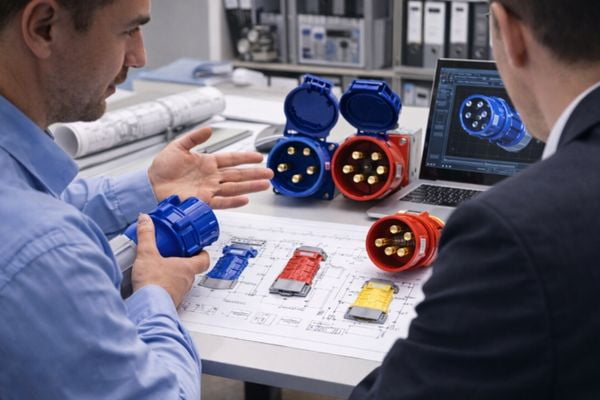
These stories are why I love this business. It's about more than just selling a product. It's about becoming a true partner, understanding a client's unique challenge, and using our deep manufacturing and engineering expertise to build a solution that works. These aren't just one-off projects; they are relationships we build that last for years. Let me share two cases that show how we apply everything we've discussed to deliver real value.
Case 1: Custom Plugs for a New Energy Auto Parts Factory
Cooperation Background A partner building a factory for new energy vehicle parts needed 63A/400V industrial plugs for their welding and testing equipment. The plugs they were using kept failing. The shells would soften and deform in the 60°C workshop heat, and dust was getting inside, causing poor connections. They needed a custom solution delivered in 15 days.
Our Solution We immediately identified the material and design flaws. We switched the shell material to a reinforced PC rated for 150°C and added anti-static properties to repel dust. We upgraded the seals to high-temperature silicone5 to achieve an IP65 rating. For the prongs, we increased the cross-section and used silver plating to handle the high current without overheating. We also added a straightening process during manufacturing to ensure every plug had a consistent and smooth insertion force.
Cooperation Effect Our custom plugs worked perfectly. After three months of continuous use in the hot, dusty workshop, there was no deformation or contact failure. The client's production line ran without interruption. We now deliver their batches within 5 days. They have since signed a long-term agreement with us, and we supply over 5,000 sets annually.
Case 2: Export Cooperation for an Outdoor Photovoltaic Power Station
Cooperation Background A European solar energy company needed IP67 industrial plugs for their outdoor power stations. Their previous supplier's plugs failed because the plastic shells became brittle and cracked after just one year of sun exposure. This was a major problem. They needed a new supplier who could meet the BS EN 60309 standard, provide full CE certification, and guarantee long-term UV resistance6.
Our Solution We knew this was a materials science problem. We selected a PC material with a UV50+ rating and added agents to improve its performance in extreme cold (-40°C). We used EPDM rubber for the seals, which stays flexible even in freezing temperatures. We also optimized the grounding and locking mechanisms to strictly comply with EU safety standards. Before shipping, we provided a full sample set with CE reports and our own test data, including a 1000-hour UV aging test.
Cooperation Effect Our samples passed all of their tests on the first try. The client was impressed with our thoroughness. Two years after installation, our plugs are still performing flawlessly across their European solar farms, with no cracking or insulation degradation. Their power supply stability has improved by 30%. They increased their annual order from 3,000 to 8,000 sets and have recommended us to other companies in their industry.
Conclusion
Understanding IEC 60309 standards, common failure points, and critical manufacturing processes is essential for industrial equipment, EPC projects, and export power systems., common failure points, and critical manufacturing processes is essential for reliable industrial power connections. With deep manufacturing control and export experience, CHBEBplugs supports global partners with compliant, durable, and application-ready industrial plug solutions.
About CHBEBplugs
CHBEBplugs is the industrial plug and socket brand under the CHBEB Group, backed by over 60 years of power industry experience. We specialize in export-oriented B2B manufacturing of industrial plugs, sockets, socket boxes, and power connection systems. Supported by China’s mature electrical industry clusters, we provide IEC-compliant products, OEM/ODM customization, and stable large-volume supply for global EPC and industrial projects.
Explore the reasons behind compatibility issues in industrial plugs and how to avoid them. ↩
Discover the importance of raw material selection in manufacturing durable industrial plugs. ↩
Explore the significance of maintaining dimensional tolerances for compatibility in plugs. ↩
Explore the process of designing custom high-temperature plugs for specific applications. ↩
Learn about the benefits of using high-temperature silicone in industrial plug designs. ↩
Understand the importance of UV resistance in outdoor industrial plugs for longevity. ↩