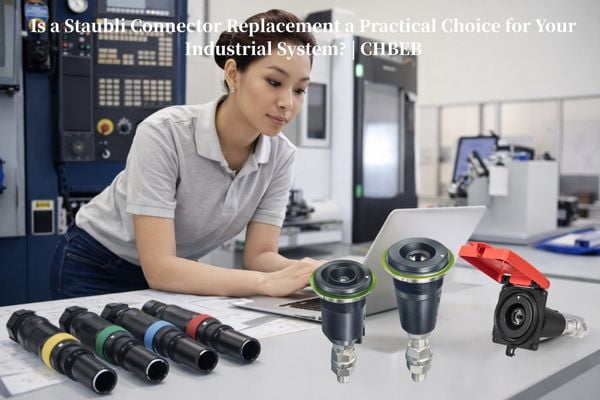
Struggling with long lead times for original parts? System downtime is hurting your operations. A reliable, compatible replacement connector can keep your industrial power systems running without interruption.
Yes, a Staubli connector replacement1 is a practical and reliable choice for single-pole insulated systems. When the replacement matches the original's electrical ratings, safety features, and mechanical durability, it solves sourcing issues and maintains system integrity without compromising performance or safety.
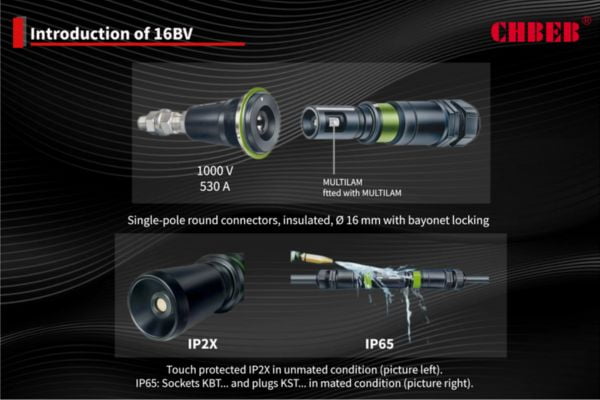
Choosing a replacement connector is a serious engineering decision. It’s not about finding a cheaper part. It’s about ensuring your power system remains safe, reliable, and efficient. I've seen many customers navigate this process, and their success always comes down to a few key factors. Let's explore what makes a replacement strategy work, so you can make a choice with confidence.
Why Even Consider a Replacement for Staubli Connectors?
Your equipment is down, and the original part has a six-week lead time. This delay costs you money and creates risk. A high-quality replacement connector gets you back online quickly.
Many engineers look for a replacement not to cut costs, but to solve real problems. These include long lead times, discontinued parts for older equipment, or a need for different features. A good replacement keeps your operations flexible and running smoothly.
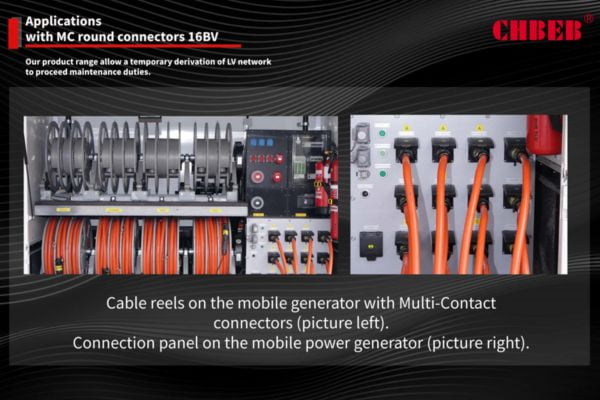
When we talk to maintenance managers2, their reasons for seeking a replacement fall into a few clear categories. It's rarely about the price tag alone. It's about adapting to real-world operational challenges. An original connector might be perfect on paper, but if you can't get it when you need it, its value drops to zero. This is where a well-engineered replacement becomes an essential tool for system reliability.
Key Drivers for Seeking a Replacement
| Driver | Challenge | How a Replacement Helps |
|---|---|---|
| Sourcing & Logistics | Original parts have long lead times or are discontinued. This causes extended downtime and operational bottlenecks. | A readily available replacement from a reliable supplier ensures maintenance schedules are met and equipment stays online. |
| System Evolution | The system's demands have changed. It may require higher current capacity or better performance in harsh environments. | A modern replacement can offer upgraded materials, higher IP ratings, or improved thermal performance to meet new demands. |
| Maintenance Efficiency | Original connectors are difficult to install or require specialized tools. This increases labor time and the risk of errors. | A replacement with user-friendly features like clear coding, simple termination, and secure locking can speed up maintenance. |
Ultimately, a replacement is an engineering decision to maintain and improve system performance.
What Makes a Replacement Connector a Safe and Reliable Choice?
You found a potential replacement, but you're worried. Will it overheat? Will the connection be secure? An unproven part introduces unacceptable risk. A safe choice must match all critical specifications.
A replacement is only reliable if it meets the original's core electrical and safety standards. This includes voltage rating, current capacity, and insulation level. You must also verify its locking mechanism and protection against environmental factors like dust and water.
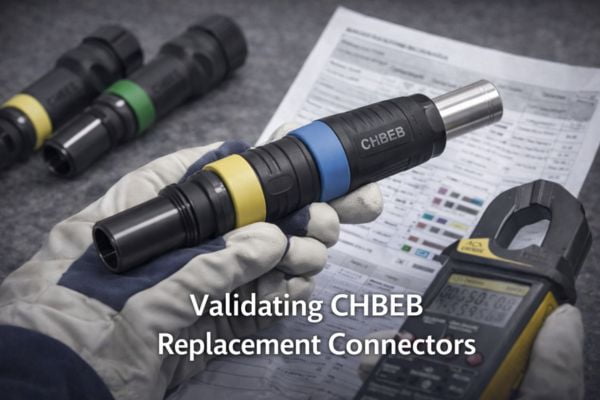
Before you even think about installing a replacement, you have to do your homework. I always tell my partners that "compatible" doesn't mean "interchangeable in every situation." The responsibility for verification falls on the user. A datasheet3 is a starting point, but it isn't enough. You must confirm that the replacement will perform under your specific operational conditions. This cautious approach prevents costly failures down the line. True confidence comes from knowing the part is not just a match on paper, but a proven performer in the field.
Non-Negotiable Technical Checkpoints
| Specification | Why It's Critical | What to Look For |
|---|---|---|
| Voltage & Current Rating | Mismatching these can cause overheating, fire, or catastrophic failure. This is the most basic safety requirement. | The replacement must have an identical or higher rating than the original. For example, a 600V/400A original needs a 600V/400A replacement. |
| IP Rating (Ingress Protection) | This determines its resistance to dust and water. A lower IP rating in a harsh environment leads to corrosion and failure. | Match the environment. If the original is IP67 (waterproof), the replacement must also be IP67. Don't use an IP44 (splashproof) part. |
| Locking Mechanism | A weak lock can lead to accidental disconnection under load, creating a dangerous arc flash event. | The replacement should have a secure, positive locking feel. It must prevent unintentional separation, especially in high-vibration areas. |
| Materials & Temperature | Poor quality materials can become brittle or melt under load. This compromises safety and connection integrity. | Look for high-quality materials like PA66/PC with a high operating temperature range, ensuring it stays stable under full load. |
Always validate with documentation and small-scale testing before a full rollout.
How Do You Implement a Replacement Strategy Without Risk?
You're considering a switch, but changing out every connector at once feels like a huge gamble. A single failure could shut down your entire facility. A phased, test-first approach is smarter.
To implement a replacement safely, start small. Install the new connector on one non-critical system. Monitor its performance closely under real-world load, then gather feedback from your technicians before making a bigger change.
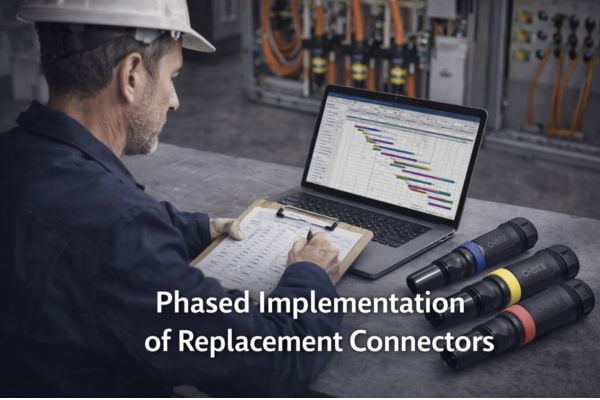
I remember a customer story that perfectly illustrates this process. He didn't jump into a full-system swap. His approach was methodical, cautious, and ultimately successful. He manages a small power plant and was stuck waiting for original Staubli parts. One of his connectors overheated, and he couldn't afford to wait weeks for a delivery. He needed a solution right away. This is how he handled it.
A Real-World Implementation Story
First, he identified the immediate problem: a critical generator line was down, and sourcing was the bottleneck. He told us, “We couldn’t wait weeks for an original part. We needed something that could work now.”
Next, he adopted a cautious testing strategy4. After reviewing our specifications, he decided to test our single-pole connector as a replacement. Instead of changing everything, he installed it on just one generator line. This limited his risk to a single, manageable circuit.
Then came the evaluation phase. For several weeks, his team monitored the connection. They checked for any signs of overheating under load and made sure the locking mechanism5 stayed secure after repeated use. The feedback was positive. The connector stayed cool, and the connection remained solid.
The final step was the phased rollout. “Once we saw that the replacement performed reliably in daily use, we expanded it to other units,” he explained. Confidence was the key. He only moved forward after his own team validated the performance in their own environment. Today, he keeps both original and replacement connectors in his inventory, giving him the flexibility to keep his plant running no matter what.
Conclusion
A well-engineered replacement for a Staubli connector is a smart engineering decision. It ensures system reliability and operational flexibility, proving it's a solution, not just a substitute.
About CHBEBplugs
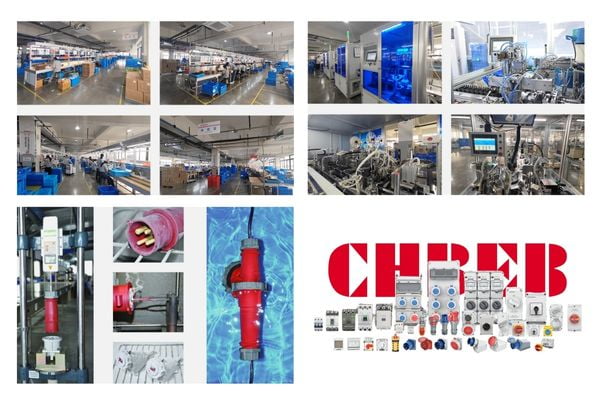
CHBEBplugs is the industrial plug and socket brand under the CHBEB Group, backed by over 60 years of power industry experience. We specialize in export-oriented B2B manufacturing of industrial plugs, sockets, socket boxes, and power connection systems. Supported by China’s mature electrical industry clusters, we provide IEC-compliant products, OEM/ODM customization, and stable large-volume supply for global EPC and industrial projects.
Explore the advantages of Staubli connector replacements to enhance your industrial power systems' reliability. ↩
Gain insights into the challenges maintenance managers encounter and how to address them effectively. ↩
Discover the essential information that should be present in a connector datasheet for informed decisions. ↩
Discover how a testing strategy can ensure the reliability of connector replacements before full deployment. ↩
Learn about the significance of a secure locking mechanism in preventing accidental disconnections. ↩