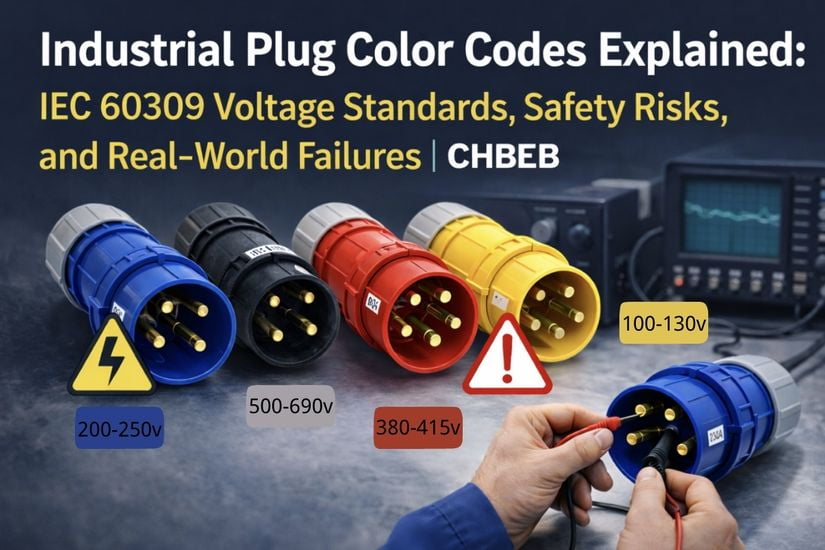
A wrong plug, a wrong voltage, and your machine is fried. This simple mistake costs factories thousands. It is a preventable disaster that happens far too often.
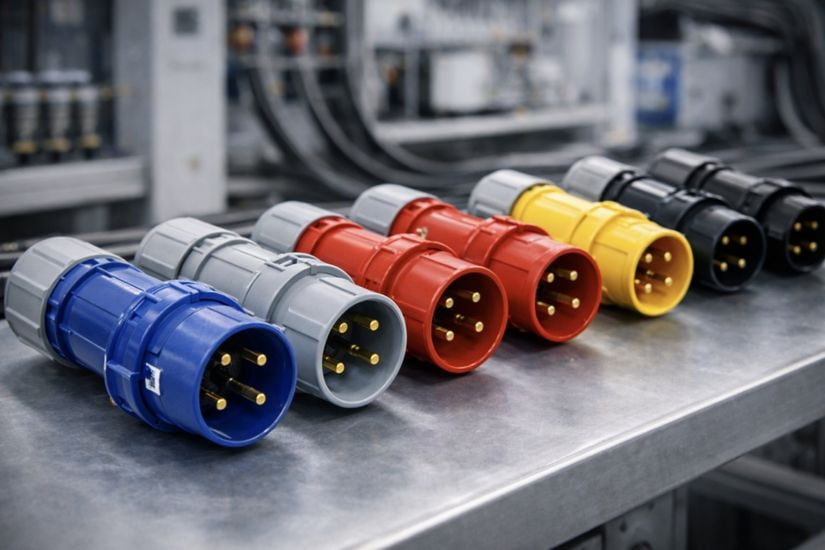
Industrial plugs use a color-coding system1 defined by the IEC 60309 standard2 to prevent accidents. Each color corresponds to a specific voltage range. For example, blue signifies 230V and red indicates 400V, ensuring workers can visually identify the correct power source instantly.
I remember a case from 2023 that perfectly illustrates this. A client, Mr. Lim from an electronics factory in Penang, Malaysia, came to us after a catastrophic failure. A worker plugged a high-value testing instrument into the wrong socket. A loud bang echoed through the workshop, and the production line went dark. The 120,000 MYR machine was destroyed by high voltage. This was not just bad luck. It was a problem rooted in color. This experience shows why understanding the color standard is not just about rules. It is about protecting your assets and people.
What is the international color code for industrial plugs?
Your workshop has multiple voltages. One wrong connection could be disastrous. How can you make sure your team gets it right every single time, without fail?
The IEC 60309 standard assigns specific colors to different voltage and frequency ratings for industrial plugs and sockets. This global "safety agreement" makes voltage identification instant. For instance, yellow is for 110V, blue for 230V, and red for 400V, eliminating guesswork.
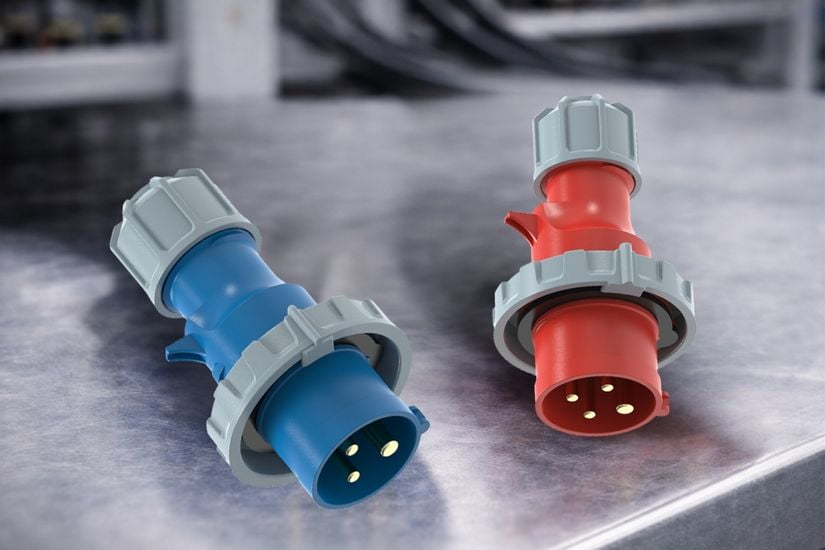
When Mr. Lim visited our workshop, he saw the standard in action for the first time. He put his faded local plugs next to ours. His old "red" plug was a washed-out pink. His "blue" one was a hazy gray. In contrast, our plugs followed the strict IEC 60309 guidelines. He finally understood that the color was not a design choice. It was a critical safety feature3.
The IEC 60309 Voltage "ID Card"
Think of the color as an ID card for voltage. It is a universal language for electricians and workers worldwide. This system is simple and effective. It prevents the kind of mix-up that cost Mr. Lim's factory so much. A quick look is all it takes to know you have the right connection.
Here is a simplified table of the most common color codes:
| Color | Voltage Range | Typical Application |
|---|---|---|
| 🟨 Yellow | 100-130V | Construction sites, low-voltage tools |
| 🟦 Blue | 200-250V | Single-phase equipment, lighting |
| 🟥 Red | 380-415V | Three-phase machinery, motors |
| ⬛ Black | 500-690V | Heavy industrial, high-power systems |
Mr. Lim realized his previous supplier provided "colorless" products. They completely ignored these fundamental safety standards. This simple lack of adherence to a global rule was the direct cause of his repeated and expensive equipment failures.
Why do cheap industrial plugs fade and cause accidents?
You bought affordable plugs to save money. But now the colors are fading, and you cannot tell the voltages apart. This small saving has created a huge safety risk.
Cheap industrial plugs often fade because manufacturers use low-quality color pigments or just paint the surface. The color is not integrated into the plastic. Exposure to heat, UV light, and chemicals breaks down the color, making the crucial voltage indicators unreliable and leading to accidents.
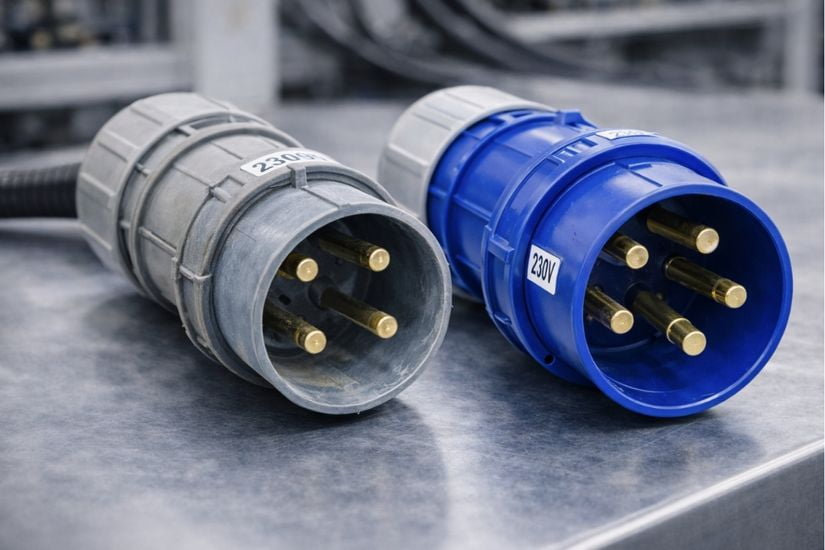
Mr. Lim's factory floor was hot, often over 35°C. This environment made his local plugs fade even faster. He learned in our production facility that creating stable, long-lasting color is a complex manufacturing challenge. It is a challenge that cheap producers simply ignore. There are three key hurdles they fail to overcome.
Hurdle 1: The "Precise Recipe" of Color Masterbatch
We use a device called a colorimeter to ensure our colors meet exact standards, like Pantone 186C for red. The tolerance is less than 0.1%. I showed Mr. Lim one of our plugs cut in half. The color was solid all the way through. His old plug was different. We cut it open and saw it was just gray plastic with a thin layer of blue paint. That is why it faded.
Hurdle 2: The "Deep Fusion" of Injection Molding
Our plugs are made by mixing color masterbatch directly with raw plastic before injection molding. The color and the housing become one solid piece. Cheaper plugs are often just painted after they are molded. I showed him the difference. I rubbed one of our plugs with steel wool 50 times. No paint came off. We did the same to his old plug. The blue paint flaked off after just 10 rubs.
Hurdle 3: The "Double Test" of Durability
We test our products for both weather resistance and electrical stability. We put our plugs in a 45°C oven for 72 hours. They came out looking brand new. His old plugs turned from red to light pink in just 24 hours. Our plugs also have a UV-resistant coating4, which is crucial for environments like his factory in Malaysia.
You need a high-current connector5 for critical equipment. A premium brand like Stäubli6 is reliable but very expensive. You feel stuck between high cost and uncertain quality.
Yes, a high-quality alternative can match a premium brand's performance if it is engineered to the same specifications. By focusing on material science, precision manufacturing, and rigorous testing, an OEM/ODM supplier can produce a connector that is fully compatible and equally reliable at a better price.
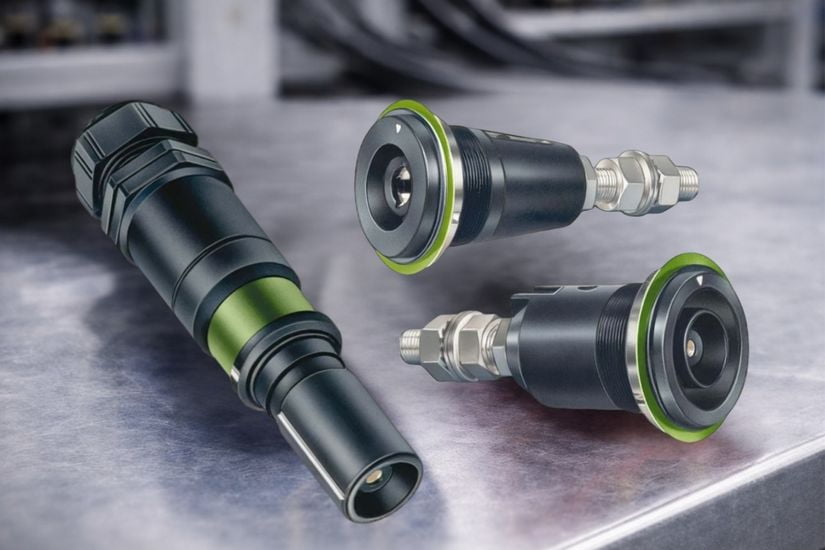
This was another problem for Mr. Lim. He needed 63A connectors for ten high-power testing machines. He was quoted 3,800 MYR for a single Stäubli connector. That was nearly 40,000 MYR just for plugs. It was a cost he could not justify. He was relieved when I showed him our alternative. It was a 63A, 400V high-current connector. It was designed as a direct replacement for the Stäubli industrial series.
Matching the Specs, Beating the Price
I explained that our model was not a cheap copy. It was an equivalent. We used the same high-quality materials, from the high-purity oxygen-free copper pins to the flame-retardant housing. The precision was identical, with a pin spacing tolerance of ≤0.03mm.
Here is a direct comparison:
| Feature | Premium Brand (Stäubli) | Our Alternative |
|---|---|---|
| Current Rating | 63A | 63A |
| IP Rating | IP67 | IP67 |
| Interface | Proprietary Industrial Series | 100% Compatible |
| Price (MYR) | ~3,800 | ~1,900 |
Mr. Lim handled our connector. The fit, feel, and weight were the same as the Stäubli sample he had seen. He was still skeptical. "Can it really replace it directly?" he asked. I confirmed it could. We had tested its life cycle (≥5,000 insertions) and contact resistance (≤5mΩ). The data aligned perfectly with the original.
How can you verify the quality and safety of an industrial plug?
You have found a supplier. Their plugs look good, and the price is right. But how can you be sure they will not fail under pressure and cause a disaster?
Verify quality through practical tests and documentation. Conduct a simple "blind test" with your team to check color clarity. Ask for third-party certifications (like TUV, CE) and data from durability tests, such as high-temperature performance and full-load electrical stability tests.
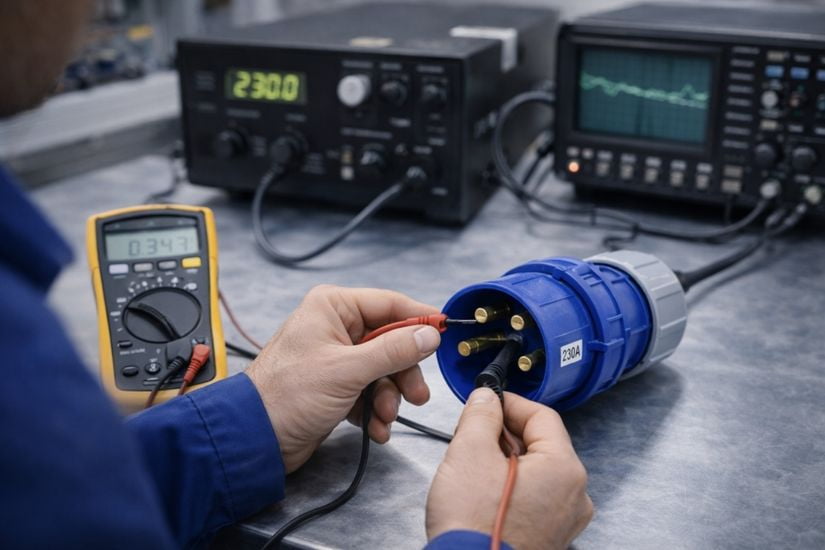
Mr. Lim was convinced by the specifications, but he needed to be certain. He proposed two on-the-spot tests right in our facility. It was a great idea. Seeing is believing.
Test 1: The Color Blind Test
He mixed our blue (230V) and red (400V) plugs with his faded local plugs. He then asked 10 of his workers, who had come with him, to pick the correct plug for each voltage based only on color. The result was clear. All 10 workers correctly identified our plugs. "Deep sea blue is 230V, China red is 400V," one said. But when it came to his old plugs, 7 of the 10 workers made a mistake.
Test 2: The Real-World Performance Test
He asked to connect our Stäubli alternative to a high-power load bank we had for testing. We ran it continuously for 4 hours at full load. The connection remained stable. There were no trips or abnormal heating. The housing temperature was only 43°C, matching the performance data of the original Stäubli. He personally plugged and unplugged it 20 times. He noted the connection was still firm and secure. We also gave him our third-party test reports, which confirmed all our claims. He was sold.
Conclusion
The color of an industrial plug is not a design choice — it is a built-in safety system defined by international standards.
When color coding fades, deviates, or is poorly manufactured, voltage identification fails, and real damage follows. Equipment burns, production stops, and people are put at risk.
That’s why selecting industrial plugs is not about price or appearance, but about verified standards, stable materials, and proven manufacturing processes. In industrial power systems, the smallest connector can carry the biggest responsibility.
About CHBEBplugs
CHBEBplugs is the industrial plug and socket brand under the CHBEB Group, backed by over 60 years of power industry experience. We specialize in export-oriented B2B manufacturing of industrial plugs, sockets, socket boxes, and power connection systems. Supported by China’s mature electrical industry clusters, we provide IEC-compliant products, OEM/ODM customization, and stable large-volume supply for global EPC and industrial projects.
Explore how color-coding can prevent costly mistakes and enhance workplace safety. ↩
Understanding this standard is crucial for ensuring safety and compliance in industrial settings. ↩
Understanding safety features can help you make informed decisions about equipment. ↩
Explore the significance of UV resistance in prolonging the life of industrial plugs. ↩
Understanding high-current connectors is essential for ensuring reliable power supply. ↩
Explore this link to understand why Stäubli connectors are trusted for their reliability and performance in industrial applications. ↩