Imported equipment with the wrong plug can halt your operations. This costly mistake is frustrating and all too common. Here’s how to choose correctly every time.
To choose the right export industrial plug, you must match the regional standard (IEC or NEMA), voltage, and current. Consider the operating environment by selecting the correct IP rating (e.g., IP67 for wet areas) and always prioritize certified safety features like locking mechanism1s and proper grounding.
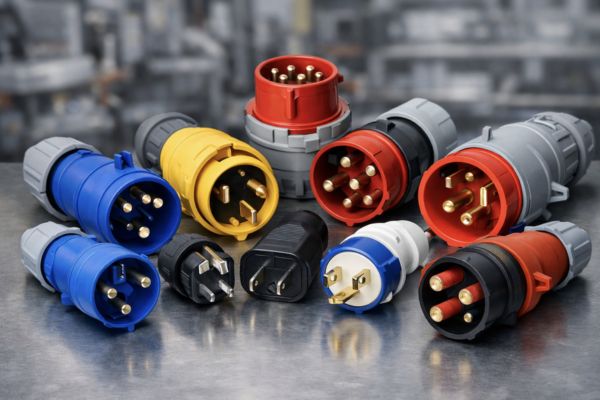
Choosing the wrong plug can be a costly mistake, as I've seen with many clients. A simple oversight can lead to project delays and damaged equipment. But don't worry, it's more straightforward than you think. Let's break it down step-by-step so you can avoid these pitfalls and ensure your equipment works perfectly, no matter where it's headed.
Exporting equipment with incompatible plugs is a common headache. It leads to project delays and angry customers. Let's cover the key regional standards you must know for 2026.
Europe and the UK use IEC 60309 standards with CE/UKCA mark2s. North America requires NEMA-compliant plugs3 with UL/CSA certification. Asian markets have diverse standards but are increasingly aligning with IEC. Always confirm the specific requirements for your export destination to ensure compatibility and compliance.
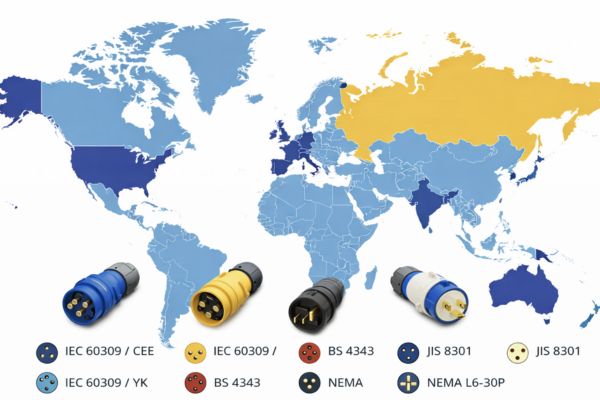
The first rule is that one plug does not fit all. I remember a client exporting industrial pumps to Germany. They assumed a generic "heavy-duty" plug would work. It didn't. The plugs lacked the proper CE mark4 and IEC 603095 compliance, and the shipment was held at customs, costing them weeks of delay. This is why understanding regional nuances is the most critical first step.
Europe (EU + UK)
In 2026, the EU and UK both rely heavily on the IEC 60309 standard. A key update requires enhanced grounding on all new installations to reduce shock risks, especially in wet environments like food processing plants. You must look for the CE mark for the EU and the UKCA mark for the United Kingdom.
North America (U.S. + Canada)
This market follows NEMA standards. A big change for 2026 is the mandatory IP67 rating for any plug used in outdoor or wet locations. This is a direct response to safety incidents on construction and agricultural sites. Also, remember that Canada requires a separate CSA certification, even if the plug is NEMA compliant.
Asia (China, Japan, India)
Asia is diverse, but we are seeing positive changes. China’s GB standard is now more aligned with IEC 60309, simplifying things for exporters. Japan still uses its compact JIS C 8303 standard, while India’s IS 1293 standard mandates high-temperature resistance due to the climate.
| Region | Primary Standard | Key Certifications | 2026 Update Focus |
|---|---|---|---|
| EU / UK | IEC 60309 | CE / UKCA | Enhanced Grounding |
| North America | NEMA | UL / CSA | IP67 for Wet Locations |
| China | GB / IEC 60309 | CCC | Harmonization with IEC |
| India | IS 1293 | ISI | High-Temperature Resistance |
Why is Matching the Plug to the Environment So Crucial?
Using a standard plug in a harsh environment is a recipe for failure. It can lead to shorts, corrosion, and costly downtime. Here's how to select a plug that survives.
Matching the plug is crucial for safety and longevity. Use IP67-rated plugs for wet or damp locations to prevent shorts. For dusty areas, choose IP65+ sealed designs. In corrosive settings, select plugs with nickel-plated or stainless steel pins to avoid degradation and ensure reliability.
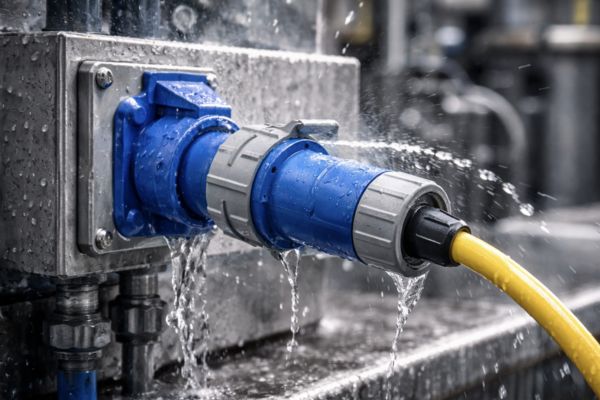
A plug's material and sealing are just as important as its electrical specs. We once worked with a coastal seafood processor in Portugal whose standard brass-pin plugs corroded and failed within months due to the salty air. They experienced constant interruptions. We switched them to our IP67-rated plugs with nickel-plated pins. The new plugs have lasted for years without issue, proving that the environment is a factor you cannot ignore. Choosing an environmentally adaptive plug protects the equipment and your reputation.
Wet or Damp Environments
For places like farms, breweries, or outdoor construction sites, water is the enemy. You need a plug with an IP67 rating or higher. This means it's fully waterproof and can even be temporarily submerged without failing.
Dusty Environments
Construction sites, woodworking shops, and mining operations are filled with fine dust. This dust can get inside a plug's connection, causing poor contact, overheating, and fire risk. A plug with an IP65 or IP66 rating is fully dust-tight and will keep connections clean and safe.
Corrosive Environments
In chemical plants or coastal areas, salt and chemicals in the air will eat away at standard metal pins. This corrosion leads to connection failure. To prevent this, you must use plugs with corrosion-resistant pins6 made from materials like nickel-plated brass or stainless steel.
High-Temperature Environments
For foundries or glass factories, ambient heat can melt standard plastic plugs. Here, you need plugs made from high-temperature-rated materials like PA66 or PC, often rated for 80°C or higher.
How Do You Match Voltage and Current to Avoid Costly Mistakes?
Sending equipment with the wrong voltage rating is a huge mistake. It can destroy the machine or leave it completely useless. Let’s make sure you get this right every time.
Confirm the destination's standard voltage and frequency (e.g., 230V in Europe, 120V in the U.S.). Next, check your equipment's power needs and select a plug with a matching current rating (e.g., 16A, 32A). Mismatching either can lead to equipment failure.
This sounds basic, but it's one of the most common and costly errors I see. A client once prepared a large shipment of industrial compressors for export to both Spain and the United States. They almost fitted all of them with 230V plugs. This would have been fine for Spain (230V, 50Hz), but the compressors destined for the U.S. (120V, 60Hz) would have been severely underpowered and useless. A simple check saved them from a massive recall and financial loss. Always verify the voltage and current for each specific market.
Voltage, Frequency, and Current Explained
- Voltage (V): The electrical potential. A 230V machine will not run correctly on a 120V supply.
- Frequency (Hz): The cycles per second of the AC power. Most of the world uses 50Hz, but North America and parts of Japan use 60Hz. This can affect motor speed.
- Current (A): The amount of electrical flow the equipment needs. The plug must be rated to handle this current (e.g., 16A, 32A, 63A) to avoid overheating.
A great trend for 2026 is the rise of plugs with built-in current monitoring. These "smart plugs7" can alert an operator if a machine is drawing too much or too little power, helping to predict failures before they cause downtime.
| Region | Standard Voltage | Common Freq. | Common Current Ratings |
|---|---|---|---|
| EU / UK | 230V / 400V | 50Hz | 16A, 32A, 63A |
| U.S. / Canada | 120V / 240V | 60Hz | 15A, 20A, 30A |
| China / India | 220V / 380V | 50Hz | 16A, 32A |
| Japan | 100V / 200V | 50Hz / 60Hz | 10A, 16A |
What Safety Features are Non-Negotiable for Industrial Plugs in 2026?
Electrical accidents are rare but can be catastrophic. They can lead to fires, severe injuries, and massive financial loss. Here are the safety features you absolutely cannot overlook.
Key safety features are non-negotiable. Your plugs must have a locking mechanism, enhanced grounding for shock protection, and flame-retardant insulation8. Most importantly, always insist on proper certifications9 (CE, NEMA, etc.) to verify that the plug has passed official safety tests and is compliant.
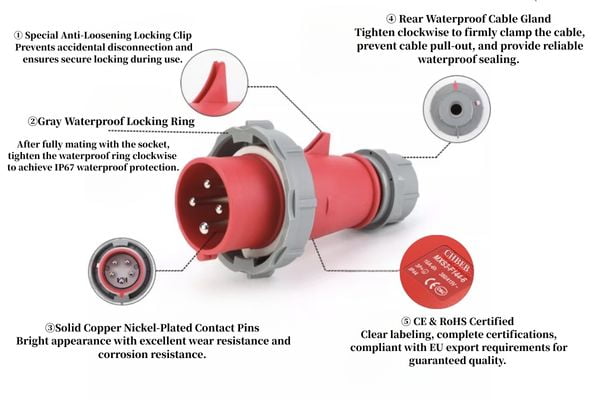
In 2026, safety is not a feature; it's a requirement. I worked with a pharmaceutical warehouse that stored temperature-sensitive vaccines. Their biggest fear was a power failure in their cold storage units. The solution was simple: switched interlocked sockets that prevent the plug from being removed while under load. Even if a worker trips on a cord, the power supply remains secure. This small investment protects millions of dollars in product. Never compromise on safety.
Locking Mechanisms
Industrial plugs should not come out easily. A twist-lock or mechanical interlock design prevents accidental disconnection from vibration or someone tripping over a cord. This is critical for any equipment that runs 24/7.
Enhanced Grounding
A proper ground connection is your primary defense against electric shock. It provides a safe path for fault currents to travel. In 2026, standards in Europe and North America have become even stricter on this. Always ensure your plugs have a dedicated, reliable ground pin.
Quality Insulation
The plug's body is its first line of defense. It should be made of durable, high-quality insulating material like PA66 or PC plastic. A growing requirement is for this material to be flame-retardant, so it won't contribute to a fire if overheating occurs.
Verified Certifications
A certification mark (like CE, UL, or VDE) is not just a sticker. It is your proof that the plug has been independently tested and meets globally recognized safety standards. Counterfeit plugs without these marks are a huge liability.
Should You Choose Cheaper Plugs or Focus on Long-Term Durability?
Choosing the cheapest plug seems like a good way to save money. However, these plugs often fail quickly, leading to costly downtime and frequent replacements. Here's why durability is better.
Always prioritize durability. While cheaper plugs save money upfront, they fail faster, leading to expensive downtime and replacement costs. A durable, high-quality plug offers better reliability, a longer lifespan, and a lower total cost of ownership, making it the smarter long-term investment.
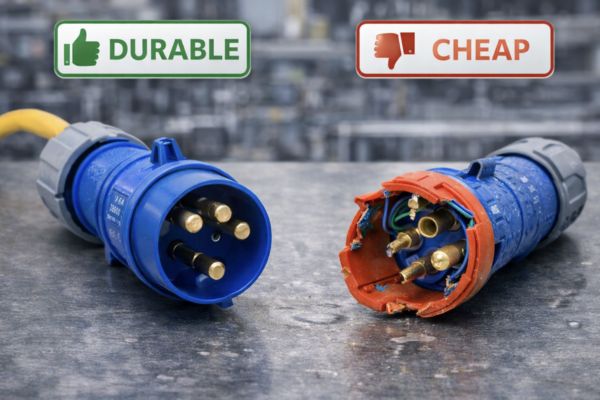
I often discuss Total Cost of Ownership (TCO) with new clients. They might see a 30% higher price on a high-quality plug and hesitate. Then I ask them, "What does one hour of unplanned downtime cost your facility?" The answer is usually thousands of dollars. Suddenly, the better plug looks very affordable. A cheap plug made of brittle plastic with thin brass pins might last six months in a tough environment. A robust plug made of PA66 nylon with nickel-plated pins might last five years or more. The math is simple. Investing in durability saves a significant amount of money and protects your operation from unexpected stops. Don't let a small initial saving create a huge future expense. Look for products with a solid warranty of at least 2 years—it's a good indicator of the manufacturer's confidence in their product's durability.
What are the Top Industrial Plug Trends to Watch in 2026?
The world of industrial connections is always changing. Falling behind on trends can make your offerings look dated. Let's look at what's new in 2026 to keep you ahead.
In 2026, watch for three key trends. Smart plugs with IoT for remote monitoring are growing. Eco-friendly plugs made from recycled materials are in demand. And universal plugs that fit multiple regional standards are emerging to simplify cross-border trade and logistics.
Staying ahead of the curve helps you offer more value to your customers. As a manufacturer, we are constantly innovating to meet these new demands. These trends are not just about adding features; they are about solving real-world problems for our partners, like improving efficiency, meeting sustainability goals, and simplifying global logistics.
1. Smart Industrial Plugs
The Internet of Things (IoT) is coming to the factory floor. Smart plugs can monitor power consumption, detect voltage drops, and send alerts to a manager's phone. This allows for predictive maintenance, helping to fix problems before they cause a shutdown. For large facilities, this data is incredibly valuable for optimizing energy use.
2. Eco-Friendly Materials
Sustainability is no longer a niche concern. Customers are demanding products that align with their green initiatives. This means using recycled plastics and metals in plug construction. It also means complying with environmental regulations like the EU's RoHS directive, which restricts the use of hazardous substances like lead.
3. Universal Compatibility
To simplify global trade, some manufacturers are designing innovative plugs that can work with multiple regional socket types. While not yet a mainstream solution for high-power applications, this is a growing trend for smaller equipment. It is especially useful for companies that export their finished products to many different countries.
Before exporting industrial equipment, confirm:
☑ Destination country standard (IEC / NEMA / GB / JIS) ☑ Required certifications (CE, UKCA, UL, CSA, CCC) ☑ Voltage, frequency, and current rating ☑ Environmental IP rating (IP44 / IP65 / IP67) ☑ Pin material (brass, nickel-plated, stainless steel) ☑ Locking & grounding safety features ☑ Expected operating temperature
Conclusion
Choosing the right industrial plug is about understanding your customer's needs. A reliable, safe, and compliant plug builds trust and ensures your equipment performs perfectly anywhere in the world.
Locking mechanisms prevent accidental disconnections; discover their importance in safety. ↩
The UKCA mark is crucial for compliance in the UK; find out what it entails. ↩
Discover the importance of NEMA compliance for safe and effective industrial plug usage in North America. ↩
The CE mark indicates compliance with European safety standards; learn why it's essential. ↩
Explore the IEC 60309 standard to ensure your plugs meet European compliance requirements. ↩
Learn about corrosion-resistant pins to ensure durability in harsh environments. ↩
Smart plugs offer advanced monitoring features; discover how they can enhance operational efficiency. ↩
Flame-retardant insulation is crucial for safety; explore its role in preventing fire hazards. ↩
Certifications ensure compliance and safety; learn which ones are essential for your plugs. ↩