
Project deadlines are tight, but critical component lead times are long. This puts your entire project schedule at risk, forcing you to find alternatives without sacrificing quality or safety.
To properly evaluate an alternative single-pole connector, engineers must conduct their own hands-on testing. This process includes visual inspection, checking installation compatibility, and performing key electrical tests like insulation resistance, dielectric withstand, and temperature rise to verify performance against project requirements before making a purchasing decision.

This story is about a real experience with an electrical engineer who did just that. For privacy, I'll call him David. His story is a great example of how a careful, hands-on evaluation process works. It shows why an engineer's own testing is more valuable than any sales pitch, and it’s a process we fully support. This is how professional buyers ensure they get the right components for the job.
When Connector Lead Times Put a Project Schedule at Risk?
Your project is on a strict timeline, but the delivery date for a key component is weeks away. This single delay threatens to derail the entire project, causing stress and financial pressure.
When the lead time for an original-brand single-pole connector is too long, engineers must find a reliable alternative supplier who can meet the deadline. However, the tight schedule cannot compromise the rigorous technical and safety standards required for the application, such as a high-power test bench.
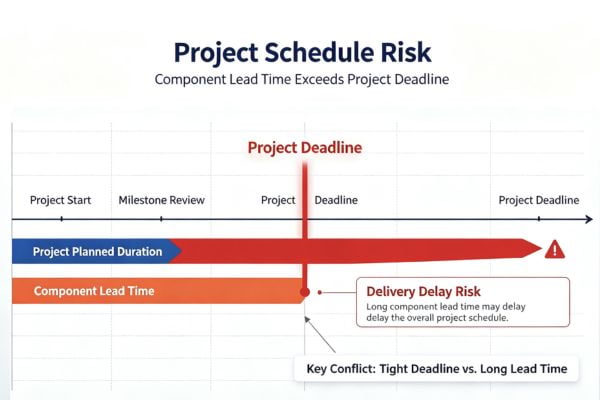
I remember the date well: August 25, 2026. David was working on a high-power test bench, and his customer needed it delivered in just four weeks. The problem was that his usual supplier for single-pole connectors quoted a nine-week lead time. This gap put the entire project in jeopardy. He couldn't wait, but he also couldn't afford to use a substandard component. The test bench required high-current connectors that were not only reliable but also safe under demanding conditions. David began searching for a manufacturer who could supply a suitable product quickly. But finding a new supplier was only the first step. He knew that any potential alternative would have to pass his own strict evaluation before he would even consider installing it in his customer's equipment. His professional standards wouldn't allow for any shortcuts, even with the deadline looming.
David’s First Conversation with Yuanyuan at CHBEB?
You've found a potential new supplier, but you're unsure if they truly understand your technical needs. You need clear, direct answers, not just a sales pitch, to move forward confidently.
During our first conversation, I listened to David's requirements for a high-power test bench connector. I then introduced our CHBEB HZ-16BV series of single-pole circular insulated connectors as a potential solution and offered to arrange for paid samples so he could conduct his own evaluation.
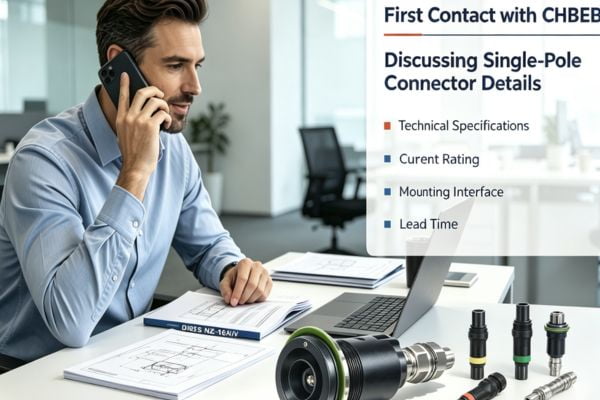
When David first contacted me, he was direct and to the point. He explained the situation with his high-power test bench project and the impossible lead time from his existing supplier. He asked if we, CHBEB, had single-pole connectors that could handle the high currents his application demanded. I listened carefully to his needs—the voltage, the required current capacity, and the panel-mount installation. Based on his description, I suggested he look at our HZ-16BV series. These are single-pole circular insulated connectors designed for exactly these types of applications, like mobile generator systems, temporary power distribution, and industrial test equipment. They feature a secure bayonet locking mechanism to prevent accidental disconnection. I explained that we could provide models with current ratings up to 630A and voltage ratings suitable for his needs, but I stressed that the final decision would depend on his own testing. To facilitate this, I told him we could ship samples to him for evaluation.
“We’ll Pay for the Samples, but I Need to Test Them Myself”?
You’re offered samples, but you know that a real decision can only be made after your own tests. You need a supplier who respects and supports your need for rigorous, independent verification.
David’s response was clear: he would pay for the samples, but only his own successful testing would determine if he placed an order. We immediately agreed, as we believe a customer’s own hands-on evaluation is the best way to build trust and confirm product suitability.
David's next words were what told me he was a serious engineer. "We can pay for the samples," he said, "but I need to test them myself. If they don’t pass my tests, we won’t proceed." This is the kind of statement I respect. It shows a commitment to quality and safety that goes beyond just finding the cheapest or fastest option. Many people ask for free samples, but a professional who is willing to invest in the evaluation process is a partner we want to work with. I agreed without hesitation. We believe in our products, but we also know that every application has unique demands. An engineer’s own validation is the only true proof of compatibility. We quickly prepared the invoice for the samples, and once payment was confirmed, we arranged for the overseas shipment. This transparent, test-first approach is fundamental to how we operate as a B2B manufacturer.
Samples Arrive Overseas: Checking Appearance and Connection Design?
The new component samples have arrived, but how do they feel in your hands? The initial inspection of build quality, materials, and mechanical design is the first critical test of a potential new supplier.
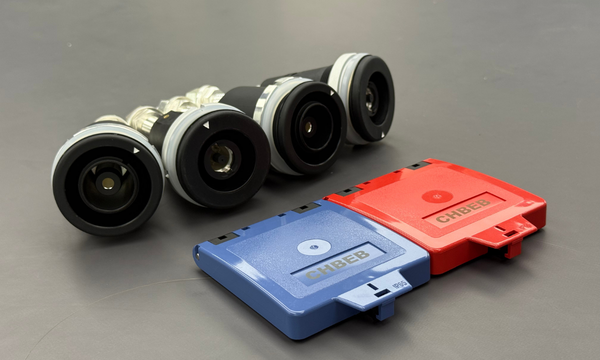
Upon receiving the CHBEB single-pole connectors, David first performed a thorough visual and tactile inspection. He checked the quality of the insulated housing, the precision of the installation interfaces, and the robustness of the quick-locking bayonet mechanism to ensure they met his expectations for industrial-grade equipment.
When the package arrived, David didn't just rush to the electrical tests. The first phase of his evaluation was all about the physical product. He unboxed the HZ-16BV panel plug and socket samples and examined them closely. I later learned he was assessing several key things.
Physical Inspection Checklist
- Housing Material: He felt the texture and sturdiness of the high-strength engineering plastic housing. He was looking for a solid build, not something that felt brittle or cheap.
- Connection Mechanism: He mated and unmated the connectors several times. He was testing the bayonet lock, listening for the reassuring click that confirmed a secure connection and feeling how much force was needed. It had to be easy enough for quick field use but strong enough to prevent accidental disconnection.
- Contact Pins: He inspected the copper contact pins, noting the silver plating designed for better conductivity and corrosion resistance.
- Installation Fit: He checked the dimensions of the panel-mount socket against his drawings for the test bench enclosure, ensuring the mounting holes and overall size were correct. This initial hands-on check is crucial. If a connector doesn't look and feel right, it rarely performs right.
Evaluating Insulation Resistance, Dielectric Withstand and Temperature Rise?
A connector looks good, but can it handle the electrical load safely? You’re worried that an unproven component could fail under pressure, causing equipment damage or a safety hazard.
After the physical inspection, David conducted a series of critical electrical tests based on his project's requirements. These included insulation resistance, dielectric withstand (hipot), and temperature rise tests to verify that the connectors performed safely and reliably under the specified electrical loads.
This was the make-or-break stage of David's evaluation. A connector for a high-power test bench has to be exceptionally robust from an electrical standpoint. He took the HZ-16BV samples to his lab and subjected them to the same tests he would use for any high-quality component. I didn't get the full test report—that was his internal data—but he explained his process.
Key Electrical Performance Tests
- Insulation Resistance Test: He used a megohmmeter to measure the resistance of the insulating material between the live conductor and the outer housing. This test confirms that there are no current leakage paths, which is critical for operator safety.
- Dielectric Withstand Voltage (Hipot) Test: He applied a high voltage (well above the rated operating voltage) for a short period. This stress-tests the insulation to ensure it won't break down under voltage spikes or transient events, preventing catastrophic failure.
- Temperature Rise Test: This is perhaps the most important test for a high-current connector. He passed the rated current through the mated connectors and measured the temperature increase over time. Excessive heat indicates high contact resistance, which leads to power loss and can be a serious fire hazard. David's methodical testing confirmed the connectors could handle the electrical stresses of his application.
From Sample Testing to On-Site Verification?
Lab tests are positive, but how will the component perform in the real world? There's always a concern that unforeseen issues will arise when you move from a controlled lab environment to the actual installation site.
With successful lab tests completed, David moved to the final verification stage: installing the CHBEB single-pole connectors onto the actual high-power test bench. This on-site trial confirmed the physical fit, ease of use, and performance within the complete system before he approved the purchase.

Passing lab tests is one thing; working perfectly in the final assembly is another. The last step in David's evaluation was to take the connectors out of the lab and into the workshop. He installed the panel-mounted socket onto the chassis of the high-power test bench he was building. This on-site verification was designed to catch any practical issues that lab testing might miss. He checked if the clearance around the connector was sufficient for easy mating and unmating. He terminated the large-gauge cables (the HZ-16BV series can accommodate cables up to 185 mm² or more, depending on the model) to the cable plug and made sure the connection was secure. Finally, he powered up the system for a trial run, monitoring the connectors under a real-world load. This step gave him complete confidence that the connectors were not just theoretically compatible but practically suited for the job. Only after this successful on-site trial did he contact me to place the bulk order.
What Should Engineers Compare When Choosing Single-Pole Connectors?
You need to choose a connector, but the options are overwhelming. How do you systematically compare different products to ensure you select the best one for your specific industrial application?
When comparing single-pole connectors, engineers should create a checklist covering four key areas: electrical ratings, mechanical features, material and environmental specifications, and supplier-related factors. A structured comparison ensures that all critical project requirements are met, from performance to logistics.
David's story highlights a very systematic approach. For any engineer facing a similar choice, breaking down the comparison into a structured format can simplify the decision-making process. It helps you move beyond just one or two specifications and look at the complete picture. Here is a table outlining the key points to consider when evaluating single-pole high-current connectors from different manufacturers. Using a table like this ensures you make a data-driven decision that balances performance, reliability, and project constraints.
| Category | Key Comparison Points | Why It's Important |
|---|---|---|
| Electrical Ratings | Rated Current (A), Rated Voltage (AC/DC), Withstand Voltage (kV), Contact Resistance (μΩ) | Ensures the connector can safely handle the electrical load without overheating or insulation failure. |
| Mechanical Features | Locking Mechanism (e.g., Bayonet, Cam Lock), Mating Cycles, Cable Size Range (mm²), Connection Type (Panel/Cable) | Determines physical compatibility, durability, and ease of installation and use in the field. |
| Material & Environmental | Housing Material (e.g., Engineering Plastic), Contact Material (e.g., Silver-plated Copper), IP Rating, Temp Range (°C) | Guarantees the connector will withstand the operating environment, including moisture, dust, and temperature. |
| Supplier Factors | Lead Time, Sample Availability & Policy, OEM/ODM Customization Options, Technical Support, Manufacturer's History | Addresses the practical business needs of your project, including timelines, support, and supply chain stability. |
Discuss Your Requirements and Sample Arrangements with CHBEB?
You have a project that needs a reliable high-current connection solution. You are tired of long lead times and want to work with a manufacturer who understands your need for technical verification.
Contact me, Yuanyuan, at CHBEB to discuss your specific project needs. We can review your requirements, suggest a suitable single-pole connector configuration, and arrange for paid samples so you can conduct your own hands-on evaluation, just like David did.
David's story is a perfect example of the partnerships we want to build with our customers. We are not just a supplier; we are a B2B manufacturing partner focused on providing industrial electrical connection solutions. If you are an engineer, project manager, or buyer facing challenges with your current connector supply, I invite you to start a conversation with us. The best way for us to help is for you to provide as much detail as possible about your application.
To get started, please share the following information:
- The model of your existing connector (if any)
- Required rated current (Amps) and voltage (Volts AC/DC)
- Cable size (mm² or AWG) you will be using
- Installation requirements (e.g., panel mount, cable-to-cable)
- Any photos of your current setup or drawings of your design
You can email me this information directly or use the CHBEB contact form. Based on your needs, we can discuss suitable options from our product lines, including our HZ-16BV Single-Pole Circular Insulated Connectors or our Cam Lock Electrical Connectors, and arrange for paid samples for your own testing.
Conclusion
An engineer’s own hands-on testing is the most reliable way to verify a new component. This process builds confidence and ensures the chosen solution truly meets your project's technical requirements.Project deadlines are tight, but critical component lead times are long. This puts your entire project schedule at risk, forcing you to find alternatives without sacrificing quality or safety.
To properly evaluate an alternative single-pole connector, engineers must conduct their own hands-on testing. This process includes visual inspection, checking installation compatibility, and performing key electrical tests like insulation resistance, dielectric withstand, and temperature rise to verify performance against project requirements before making a purchasing decision.
This story is about a real experience with an electrical engineer who did just that. For privacy, I'll call him David. His story is a great example of how a careful, hands-on evaluation process works. It shows why an engineer's own testing is more valuable than any sales pitch, and it’s a process we fully support. This is how professional buyers ensure they get the right components for the job.