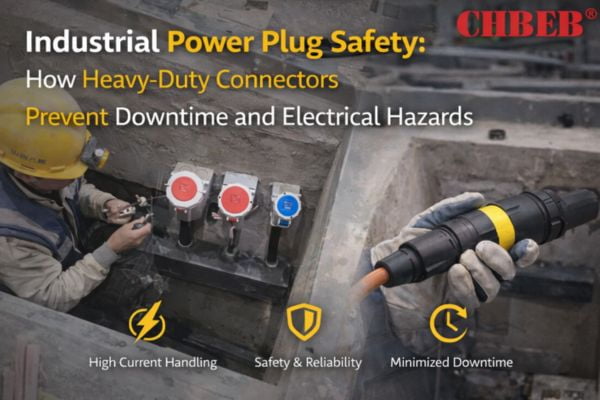
Industrial power plug safety is a critical issue in factories where high current, vibration, and harsh environments can quickly turn weak connections into fire hazards. Using certified heavy-duty connectors, choosing the correct IP rating, and following basic inspection practices are the most effective ways to prevent downtime, electrical failures, and safety incidents.
Master industrial power plug safety1 by using heavy-duty connectors2 designed for high-current and harsh environments. Follow best practices like regular inspection, ensuring proper IP ratings for your application, and training staff on correct connection procedures. This prevents downtime and ensures compliance.
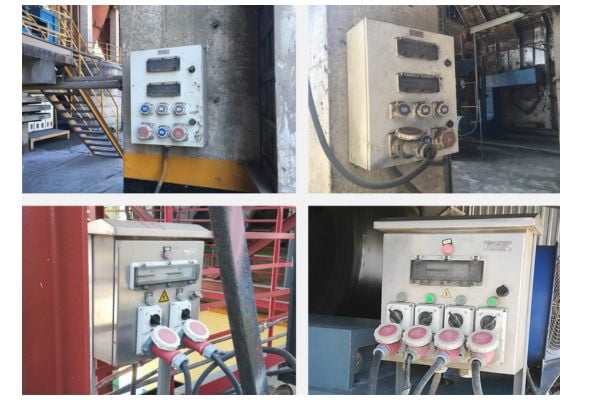
I recently spoke with an operations supervisor from a German auto parts factory. Let's call him Mark. Mark was facing a crisis. His main production line kept shutting down randomly. The cause was always the same: a faulty power plug connecting his heavy machinery. These failures were costing him hours of downtime and putting his delivery schedules at risk. The final straw came when a worker saw sparks fly from a connector. Mark realized he was one step away from a major fire. His story is a powerful reminder that what seems like a small component can be the single point of failure for an entire operation. It pushed him to understand the difference between just any plug and the right heavy-duty connector. This journey is something we see with many of our partners, and it's why we focus so much on safety and reliability3.
Why Do Standard Industrial Plugs Fail in Demanding Environments?
Experiencing frequent plug failures and production halts? These interruptions are often caused by using plugs unsuited for industrial stress, leading to costly downtime and safety risks.
Standard plugs fail because they are not built for the high currents, vibrations, temperature fluctuations, and contaminants of industrial settings. This leads to material degradation, poor contact, overheating, and eventual failure, posing significant safety and operational risks.
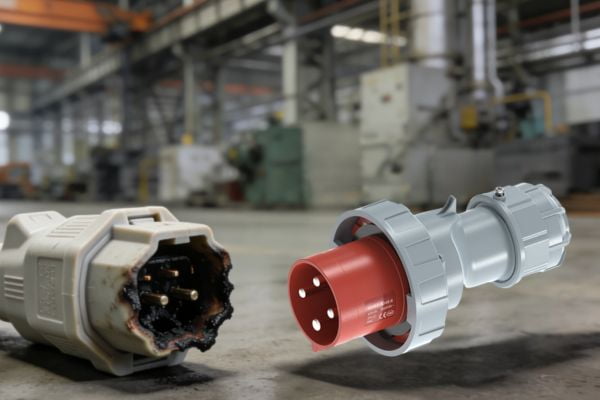
Mark's initial mistake was a common one. He applied a consumer purchasing logic to an industrial problem. He focused on the initial price tag, not the total cost of ownership. The cheap plugs he bought were labeled "industrial," but they were not true "heavy-duty" connectors. They simply couldn't handle the stress of his factory floor. The constant vibration from the stamping machines caused the internal contacts to loosen over time. This created poor connections, leading to overheating that degraded the plug's plastic housing. The near-fire incident was a direct result of this material failure. A plug that isn't designed for the environment will always be a weak link. We build our connectors to solve this exact problem, ensuring they perform under the toughest conditions.
Here is a breakdown of the key differences:
| Feature | Standard "Industrial" Plugs | True Heavy-Duty Connectors (Our Standard) |
|---|---|---|
| Housing Material | Basic plastics that can become brittle or soften with heat. | High-quality PA66/PC materials for superior thermal stability and impact resistance. |
| Contact Stability | Prone to loosening under constant vibration, causing arcing and power loss. | Engineered for a secure fit that maintains contact integrity even in high-vibration areas. |
| Thermal Resistance | Can overheat and deform under high-current loads, creating a fire hazard. | Designed to safely manage heat generated by continuous high-current use (up to 125A). |
| Ingress Protection | Often have minimal or no certified protection against dust and moisture. | Certified with IP44 (splashproof) and IP67 (waterproof) ratings for reliable use in wet or dusty areas. |
| Mechanical Strength | Can crack or break easily upon impact, exposing live components. | Built with a robust design to withstand rough handling and accidental impacts on the factory floor. |
What Are the Essential Best Practices for Using Heavy-Duty Connectors?
You’ve invested in quality connectors, but are you using them correctly? Improper handling can still lead to failures, undermining your investment and compromising safety on the factory floor.
**Essential best practices include selecting the correct IP rating (IP44/IP67) for the environment. Choosing an insufficient IP rating is one of the most common causes of moisture ingress, corrosion, and premature connector failure in industrial facilities.
Ensuring the plug is fully inserted and locked, performing regular visual inspections for wear or damage, and keeping connectors clean. Proper training for all operators is key.**

After his wake-up call, Mark didn't just buy better plugs. He created a new safety protocol based on industry best practices. This change was just as important as the hardware upgrade. A high-quality connector is only effective when it's used and maintained correctly. We work with our partners to help them build these practices into their operations because we know our products' reliability depends on it. Training your team on these simple but crucial steps transforms a purchase into a long-term safety and productivity solution. It ensures you get the maximum value and protection from your investment in quality components. These are the core practices Mark implemented, which we recommend to all our clients.
1. Select the Right Connector for the Job
The first step is always proper selection. Not all heavy-duty connectors2 are the same. You must match the connector to the specific demands of the application.
- Voltage and Current: Ensure the plug's rating (e.g., 16A, 32A, 63A, 125A) matches or exceeds the equipment's requirements. Under-specifying is a primary cause of overheating.
- IP Rating: Understand your environment. For indoor machinery protected from liquids, an IP44-rated (splash-proof) connector is often sufficient. For outdoor use, wash-down areas, or very dusty environments, an IP67-rated (fully waterproof and dust-tight) connector is essential for safety and longevity.
- Specialized Applications: Some industries have unique needs. For example, reefer containers require plugs with a specific pin configuration (3H/4H). Marine and port environments need connectors with high corrosion resistance4, like our CCS-certified products.
2. Ensure Proper Installation and Operation
- Full Engagement: Always push the plug in completely until it is fully seated in the socket. A partial connection creates a smaller contact area, leading to high resistance and dangerous overheating.
- Use the Locking Mechanism: If the connector has a locking ring or latch, always use it. This prevents accidental disconnection due to vibration or tension on the cable. Our mechanical interlocks are a great example, as they physically prevent the plug from being removed while the power is on.
3. Implement a Regular Inspection Schedule
- Visual Checks: Train operators to perform a quick visual check before each use. Look for cracks in the housing, signs of discoloration or melting (a clear sign of overheating), and bent pins.
- Scheduled Maintenance: Establish a simple weekly or monthly checklist for a more thorough inspection. Check for loose terminal screws inside the plug, signs of internal corrosion, and dirt or debris in the socket. A clean connector is a safe connector.
How OEM Manufacturing Quality Directly Affects Industrial Power Plug Safety
Frustrated by inconsistent quality from suppliers? Choosing a cheap but unreliable OEM can introduce hidden risks and long-term costs, jeopardizing your entire operation's safety and reputation.
The right OEM partner ensures safety and reliability through certified manufacturing (TUV, CE, UL), high-quality materials (PA66/PC), and a one-stop process from mold design to testing. This guarantees every connector meets stringent industrial standards, protecting your investment and personnel.
Mark’s story highlights a critical business lesson: your component supplier is your partner in safety and reliability. When you choose an OEM/ODM manufacturer, you are not just buying a product; you are buying their process, their materials, and their commitment to quality. A supplier who cuts corners on any of these is passing the risk on to you. As a manufacturer with a 60-year heritage under the CHBEB Group, we understand this responsibility. Our entire operation is built to eliminate risk for our partners. We control every stage of production, from the initial R&D and mold design to the final assembly and testing. This gives us, and you, complete confidence in the final product. It's the difference between a simple transaction and a true industrial partnership.
Here’s how a dedicated OEM partner makes a tangible difference:
| Aspect of Partnership | Low-Quality Supplier | A Dedicated OEM Partner (Like Us) |
|---|---|---|
| Material Sourcing | Uses cheaper, unverified plastics that may not meet thermal or impact standards. | Exclusively uses high-grade materials like PA66 and PC for proven durability and safety. |
| Manufacturing Process | Often outsources different stages, leading to inconsistent quality control. | Manages a one-stop manufacturing process (R&D, mold, injection, assembly, testing) for total quality assurance. |
| Certifications | May lack comprehensive, verifiable certifications, creating compliance risks for you. | Provides products with globally recognized certifications (TUV, CE, UL, SAA, CCS) to guarantee safety and market access. |
| Engineering Support | Offers standard products with little to no customization or technical support. | Provides full OEM/ODM services, from custom mold design5 to private labeling, acting as an extension of your engineering team. |
| Long-Term Vision | Focused on a single, low-cost transaction. | Focused on building a long-term partnership, offering stable supply, project support, and continuous improvement. |
Conclusion
Choosing certified heavy-duty connectors and following best practices is not a cost. It is a critical investment in the safety, efficiency, and long-term profitability of your industrial operations.
Learn essential safety measures to protect your operations and workforce from electrical hazards. ↩
Explore how heavy-duty connectors enhance safety and reliability in demanding environments. ↩
Discover strategies to enhance safety and reliability in your industrial electrical systems. ↩
Understand the importance of corrosion resistance in ensuring connector longevity and reliability. ↩
Learn about the advantages of custom mold design in creating reliable electrical components. ↩