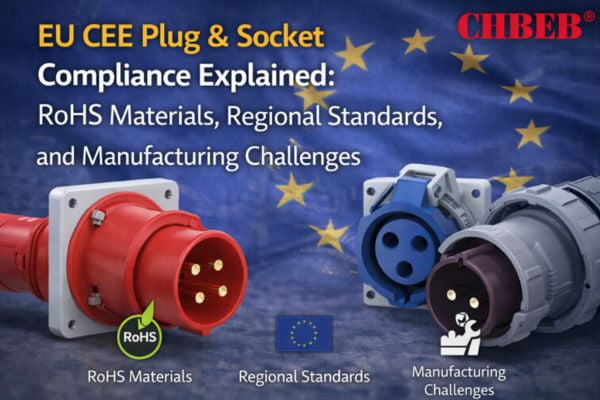
You need EU-compliant CEE plugs, but complex RoHS rules and regional specs are a nightmare. One small mistake can lead to product recalls and serious financial losses.
Ensuring EU-compliant CEE plugs requires four core steps: selecting RoHS-compliant materials1, precision injection molding, regional standard customization (e.g., French or Swiss pin configurations), and rigorous compliance testing. The hardest part is managing material compliance and mechanical precision at the same time—this is where experienced manufacturers make the difference.
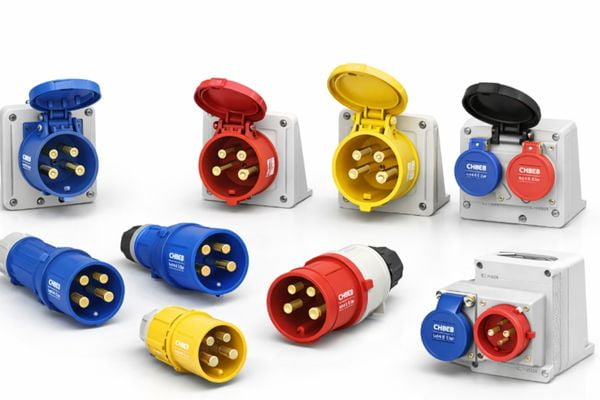
It sounds simple on the surface, but making a CEE plug for the European Union is far more complex than most people think. Many manufacturers can pass one test but fail another, leaving you with a product that is unusable or illegal. Let's break down exactly what these challenges are and how we, as your manufacturing partner, solve them to ensure your success.
Why is integrating compliant materials with regional specs the biggest hurdle?
Sourcing CEE plugs for the EU seems easy. But many suppliers fail on compliance and fit, putting your projects and reputation at risk. We manage this complexity for you.
This is a two-part challenge that many manufacturers fail to manage effectively. First, you must use materials that meet strict EU RoHS rules. Second, the product must perfectly fit unique socket standards in each country. Getting both right requires expertise that smaller factories simply don't have.
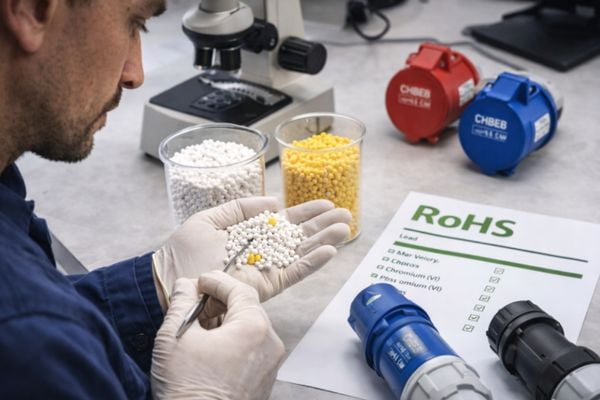
When we manufacture a CEE plug or socket for the European market, we follow four critical stages. However, the real difficulty lies in mastering the first and third steps simultaneously. This is where most supply chains break down.
The Four Core Manufacturing Stages
- Eco-Friendly Material Selection: We must source plastics and metals that are verified to be free of restricted hazardous substances.
- Precision Injection Molding: Every component must be molded to exact dimensions for a perfect fit and function.
- Regional Specification Customization: We must adapt the design to fit the specific standards of different EU member states.
- Compliance Testing & Certification: The final product must be rigorously tested to prove it meets all legal and safety standards.
The primary challenge is combining material compliance (Step 1) with regional customization (Step 3). You need to find a plastic that is compliant, and then ensure it works perfectly with the high-precision molds required for a French or Swiss plug design. For example, according to the RoHS directive, raw materials must not contain cadmium above 100 parts per million (ppm) or lead above 1000 ppm. At the same time, the molded plug pins must fit into a French-style socket with zero issues. This level of integration is a job for highly experienced manufacturers, like those in China’s Yangtze River Delta with a long history of exporting. A small factory might just use any standard material. This product will almost certainly fail an inspection by the EU's safety gate system (formerly RAPEX) and could be subject to a continent-wide recall. Even worse, the plugs might not even install correctly because of tiny, almost invisible errors in pin dimensions.
How do you manage the strict details of RoHS and diverse EU standards?
Managing EU CEE plug compliance requires simultaneous control of RoHS material limits and country-specific mechanical standards. You need plugs that are both safe and compatible. But balancing RoHS substance limits with the different physical plug types across Europe is a huge challenge. One mistake means failure.
The key is a dual-focus process. For RoHS, we test every material batch for 10 hazardous substances and keep detailed reports. For adaptation, we use country-specific molds and perform precision checks down to 0.01mm to guarantee a perfect fit every time.
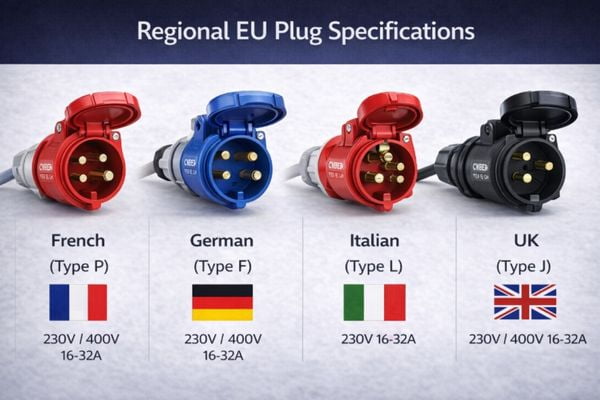
Balancing compliance and adaptation is the most difficult part of making products for the EU. It is a constant technical challenge that requires deep expertise and investment. On one side, we have strict chemical regulations. On the other, we have precise physical requirements that change from country to country.
The Compliance Side: RoHS Directive
The EU's RoHS directive restricts the use of 10 specific hazardous substances in electrical products. Standard copper alloys and plastics often contain excessive levels of lead and cadmium. To solve this, we must source specialized, eco-friendly alternatives. This adds another layer of complexity and cost.
- Material Testing: We cannot just trust a supplier's datasheet. We must test every single batch of raw material we receive. This testing costs thousands of dollars per batch.
- Record Keeping: We are required to keep all test reports on file. If an EU authority ever questions our product, we can immediately provide documentation proving its compliance.
The Adaptation Side: Regional Standards
While the IEC 60309 standard[^2] provides a common framework, it doesn't cover all the national variations. This is where many suppliers fail. They make a "standard" plug that doesn't actually work everywhere.
Here is a simple breakdown of some key differences:
| Country | Key Specification | Manufacturing Challenge |
|---|---|---|
| France/Belgium | Recessed earth pin (pin-in-sleeve) | Requires a completely different mold for the socket face to ensure proper grounding. |
| Switzerland | Type J (SEV 1011) pins in an isosceles triangle layout | The pin spacing and shape are unique. A standard IEC plug will not fit. |
| United Kingdom | BS 1363 three-pin flat design for some applications | While less common for CEE, specific UK installs need BS 4343 compatibility. |
Switching between molds for these different types is a high-precision task. If the mold alignment is off by just 0.01mm, the plug will not insert smoothly or may not connect at all. We have to recalibrate our machines constantly to ensure every single plug we make is perfect for its intended country.
How did a near-failure with a German client become a success story?
One early project with a major German client nearly failed due to a RoHS material compliance risk that threatened the entire order.
We almost lost the contract. But we acted fast. We immediately sourced a premium, certified eco-friendly PC material. We provided batch-specific RoHS reports and even customized the pins. This saved the deal and turned a crisis into a long-term partnership.
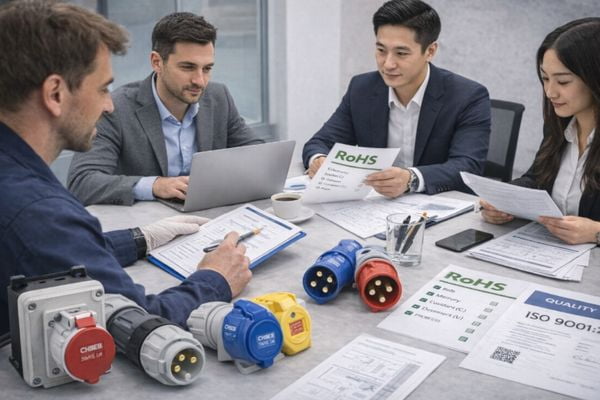
During a large first-time order with a Munich-based EPC contractor, a third-party audit flagged our plastic material as too close to the RoHS cadmium limit. We were confident in our process, but we were still learning. The client was an EPC contractor for a large factory build, and the standards were incredibly high. We produced the first batch of CEE sockets, and everything looked perfect.
The Problem in the Report
Then, we got an email. The client had hired a third-party German testing agency to audit our products. Their report showed that the cadmium content in our plastic parts was very close to the 100 ppm legal limit. It was technically compliant, but the agency flagged it as a risk. The client demanded a full investigation and rectification. I felt my stomach drop. We were on the verge of losing a massive contract and damaging our reputation before we even started.
Our Solution and a Lesson Learned
We had to act immediately. There was no time for excuses.
- Material Upgrade: We stopped production and immediately switched our material supplier. We sourced a premium, eco-friendly polycarbonate (PC) material that had certified cadmium levels far below the limit.
- Total Transparency: For the new production run, we tested every single batch of the new PC material. We sent every RoHS test report directly to the client before shipping the goods. This showed we were serious about compliance.
- Customization for Germany: We also noticed the German spec had a preference for a small design feature to prevent mis-plugging. We adjusted our mold and added this feature to the pins, showing we understood their specific needs.
The client was impressed. The new batch passed their third-party inspection with flying colors. The client later told me that their previous suppliers always had issues. Either their compliance reports were missing, or the plugs had a poor physical fit. He said our products saved his team a lot of headaches. That single client has since become one of our biggest partners. They even referred us to their colleagues in France and Italy. Today, our orders from the EU market make up over 30% of our business, all because we learned to turn a near-disaster into a showcase of our commitment.
Conclusion
EU CEE plug compliance is not about passing one test or following one standard.
The real challenge lies in making multiple requirements work together — RoHS-compliant materials, country-specific mechanical designs, and high-precision manufacturing — without compromise. Many products fail not because standards are unclear, but because suppliers cannot control chemical compliance and regional fit at the same time.
When both material integrity and regional precision are engineered into the process, EU CEE plugs stop being a regulatory risk and become a stable, long-term solution for the European market.
About CHBEBplugs
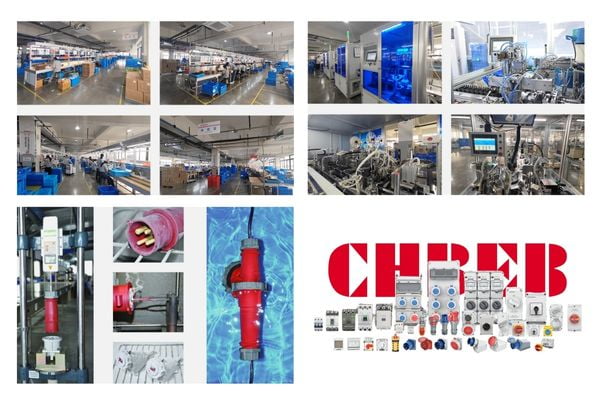
CHBEBplugs is the industrial plug and socket brand under the CHBEB Group, backed by over 60 years of power industry experience. We focus on export-oriented B2B manufacturing of industrial plugs, sockets, socket boxes, and power connection systems. Supported by China’s mature electrical industry clusters, we provide IEC-compliant products, OEM/ODM customization, and stable large-volume supply for global EPC and industrial projects.
Understanding RoHS-compliant materials is crucial for ensuring your products meet EU regulations and avoid costly recalls. ↩